Cabernet Sauvignon of CURRENT Note
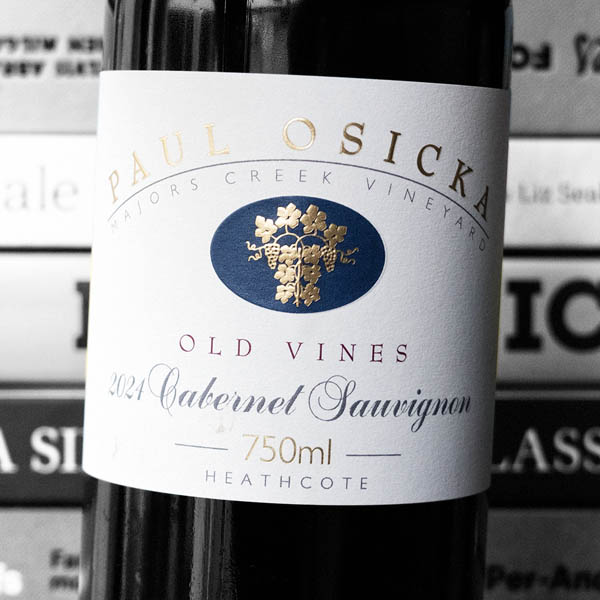
Paul Osicka Old Vines Cabernet Sauvignon 2024 (Heathcote, Vic)
Deep, dark, and saturated. Smells powerful this. Damson violet and squeezed mulberryish. There’s Aussie sous bois among the peel and fruitcake which is a comforting component, not a feature. Carbon paper lustre too. The damson plummy depths build as it soaks up air. It tastes as it smells—packed with punnets of sweet-sharp fruit—shaped by precise, melty tannins. There’s silky sweet tannin density here—no lack of extract—just an ease to the grip (if this makes textural sense). There’s warmth, but it’s of the fireside kind: comforting. Aged fruitcake and fab crema oak mouth-aroma wafts to close too. Should evolve characterfully. The vineyard tells us it will (see below). 95(96)/100 (e) - 9/10 (h) - 😋😋😋 - $60 cellar door and via mailing list.
Now I’m tempted to compare this to the 2012 Old Vines, which I had the great fortune to taste after six years in bottle, which was a really special Osicka Old Vines release to me. But while the old vines are the same—interplanted among the original rows of Shiraz —a few things concerning the wine’s creation—vinification and maturation—have transpired since that release.
Simon Osicka tells me that he acquired an Oscyllis destemmer a few years ago: ‘A game changer,’ is how he describes it—‘Osicka’s Oscyllis’, could be the title of an Umberto Eco or Elias Canetti novel. There’s a link here that demonstrates how gently this removes the berries from the rachis.
This has affected the nature of the tannins extracted. Not the quality or density of the tannin, but the structure of them, particularly in the Cabernet Sauvignon to my palate. They’re easier in their evolution.
And while I’m not sure about this observation entirely, I do understand the oak regime has evolved significantly also. Re-reading my notes the 2012 appears to exhibit a bit more of an older oak influence—beautifully maintained and characterful older oak I should point out. I’m sure Simon will correct me here if I’m wrong. The Boutes cooperage I do know is his preferred source of oak of the larger format kind, for both Cabernet Sauvignon and Shiraz.
This is simply background to the Osicka Old Vines story. Which is a fabulous wine and an important part of Heathcote’s history in itself. Because the winegrowing district now formally known as Heathcote, did not exist as a wine region when Simon’s grandfather and grandmother, Paul Snr. and Rosalie, established their vineyard in the mid-fifties.
There’s barely a mention of the region in James Halliday’s divine little volume, Wines & Wineries of Victoria (University of Queensland Press, 1982). Only Albi Zuber’s vineyards around Heathcote and Mount Ida get mentioned in the section on Bendigo. Osicka features in the Central Goulburn Valley chapter. Heathcote was granted GI status in 2002.
This is the first Old Vines release since the 2017 which I tasted in a small half-blind bracket on 26th September 2020. Among the randomised group were wines from Margaret River (Corymbia, Vasse Felix), Clare (Wendouree), the Yarra Valley (Yarra Yering), the Fleurieu Peninsula (Salomon Estate), Frankland River (Frankland Estate), and McLaren Vale (Hickbotham Clarendon Vineyard).
I’ve not referenced tasting this group ’til collecting these observations today (17th July 2026). The Osicka OV was my top pointed wine in the tasting I’ve just released, but more significantly, in revisiting my notes, I attributed the descriptors of ‘Damson violet. Mulberryish’ to the Old Vines Osicka (although not to the annual release Osicka Cabernet Sauvignon which was also in the line-up).
While I did observe violet in a few of the other wines, I made no reference to mulberry or damson in any others. So the vineyard clearly remains the primary communicator.
And this Osicka old vine cabernet sauvignon story should be communicated. Perhaps the most significant part of it being the vines' old age. Because, while I’m not sure when the Hickinbotham vineyard was planted to cabernet, Osicka’s is certainly the oldest of all the other lauded—and many storied—cabernet sauvignon winegrowers listed above.
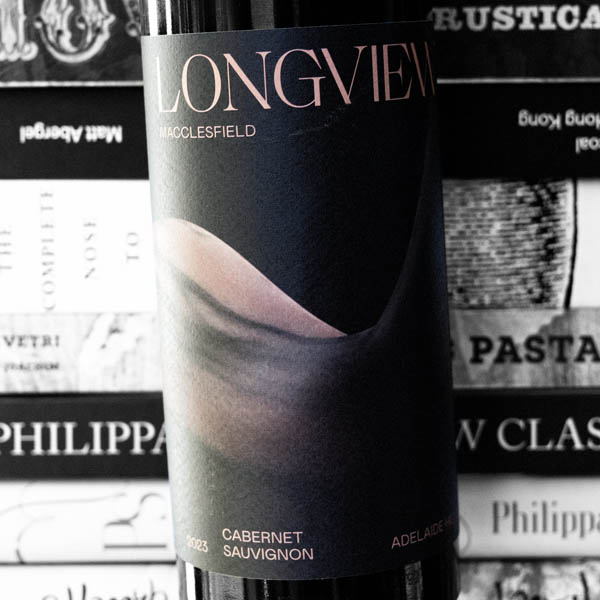
Longview Macclesfield Cabernet Sauvignon 2023 (Adelaide Hills, SA)
Leaf and bitter peel lead as it opens, accompanied quite soon by bitter chocolate and then blackberry-currant too. Although it’s more edgy blackberry, but does have classic flake tobacco pyrazine also. Complexing components one and all, mingling more with time in glass. There’s also a surprise waft of bergamot* into frankincense. With all described above, I was expecting w a slightly leafy edge to the palate also, but it’s all about juicy-edgy forest berry fruit sweetness. And mouth-aroma reverbs of the citrus peel on the nose. The tannins have just the right weight of austerity about them and juxtapose the loganberry pippy juiciness perfectly. It get’s chocolaty as it warms on the tongue; even a bit like salted chocolate, actually. And there’s a tweak of anise arising as it sits which is always a good thing to see in cabernet sauvignon**. Leads you in slowly. This is packed with surprises. 94(95)/100 (e) - 8/10 (h) - 😋😋 - $48 cellar direct.
*Tea leaf of the Assam kind I’ve often deployed as a descriptor in Cabernet Sauvignon, so maybe I’m suggesting here Earl Grey? The citrus bergamot orange—real oil is used in the finest examples—distinguishing this strange, but distinctly English camelia sinensis brew.
Or perhaps I’m channeling this cabernet sauvignon’s Italianate-ness? As not for the first time when I’ve encountered other vintages of the cultivar from this vineyard in my half-blind lineups I’ve been reminded of wines I’ve happened upon from the Tuscan coast. And the finest bergamot is generally acknowledged to be grown in Italy. Although further south in Calabria.
Or perhaps it’s borrowing aromatic influences from the nebbiolo which is planted alongside it on Longview’s ‘Vista’ hillside? The frankincense observation is certainly one I most frequently encounter in nebb, and the nebbiolo of the south, Aglianico.
**Anise is a classic cabernet descriptor, however—as is liquorice. As the legendary polymath, Randall Grahm once philosophised, over a glass of 1982 A.P. Birks Wendouree Cellars Malbec Cabernet Sauvignon a small group of us were much enjoying many years back, ‘The quality of liquorice in wine indicates that it is in harmonious balance.’
And this cabernet sauvignon most certainly is also. It ain’t quite up there with the completely sublime ’21, but I do rate it a smidge higher than the ’22, with which it shares remarkable aromatic similarities. A wine in which I noted, ‘…a Chianti thing.’ Perhaps when I encounter this in any future local examples of the cultivar I should swap it out with, ‘…a Macclesfield thing’.
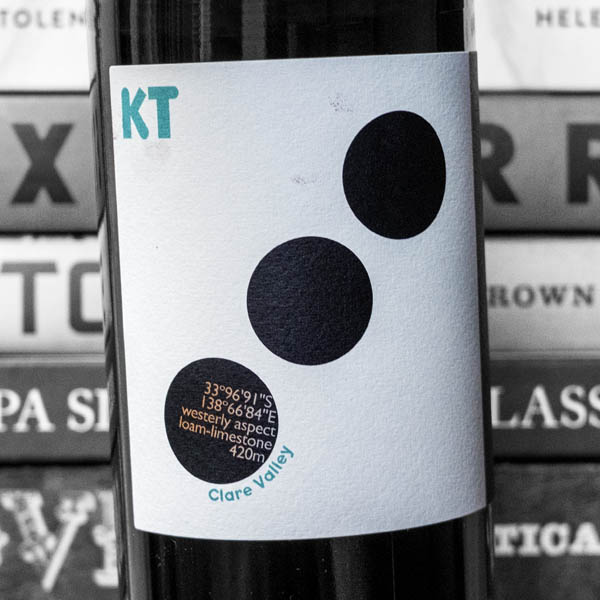
wines by KT Castine Vineyard Cabernet Sauvignon 2022 (Clare Valley, SA)
Sweet fragrant plum skin and autumn—just-fallen, comforting, damp—deciduousness. Get’s juicier and juicier—mulberry-ish—and there’s inky violet carbon paper glinting in and out. The fruit is blue becoming blacker as it blooms. As it soaks up air, there’s molasses flake tobacco*. Some bark and seaweed too. Sharp, edgy, as mulberry-blackberry on the tongue, and builds dusty into melty tannins in an Italianate—Tuscan—way. Actually no: they’re authentic—Clare cabernet tannins such as you will encounter in a Wendouree*. It bursts with summer pudding pippy fruit as it flows too. Flavour flave. 94(95)/100 (e) - 9/10 (h) - 😋😋(😋) - $60 cellar direct. Will shape out further in a few more years I reckon, although my tasting history of Cabernet Sauvignon from the Castine vineyard is limited.
* As it happens there were two Wendouree wines—the Cabernet Sauvignon and Cabernet Malbec—as well as Grosset's Gaia, Lake Breeze Arthur’s Reserve and others in the line-up in which I encountered the above. So, it was in classy company indeed. Grosset’s Gaia ’22 is one of the finest reds I’ve ever encountered from Clare. As is the Kerri Thompson Howarth Vineyard Shiraz Cabernet Sauvignon (reviewed on this page).
* Also I can—or used to be able to—distinguish burley and brights from latakia, and the like, as in a past professional life I used to blend pipe tobacco. Flake tobacco is pressed with sugar syrup, concentrated fruit juice or any other thick, sweet liquid. Maybe ‘burnt figginess’ might assist as an alternative descriptor for those unfamiliar with the evils of pipe baccy.
But it’s not unusual to find tobacco references in the descriptors used in reviews of Cabernet Sauvignon, especially ‘cigar box’. As they both—the divine grape cabernet and the evil leaf tobacco—share distinctive pyrazine compounds. So to do many other adored substances—chocolate, tomatoes, potatoes—which returned with seafarers following exploration of the Americas, the so-called 'New World'.
Yalumba ‘The Menzies’ Cabernet Sauvignon (Coonawarra, SA)
There’s a sniff of peat in here. Some tarriness. (So my Coonawarra Wynns ‘91 thing wasn’t too far off.*). Fab fruity Assam tea leaf and eccles cake. So latently complex this. Loganberry leaf and pips drift in and around too. Seriously deep, sparkly, forest berry fruit in here, which is steeped in stylish wood and formed in terra cotta dusty tannins. The (seriously fine) oak is a component, not a feature. As the wine opens it gets more moist fruitcakey and brandied cherry deep. This is classy cabernet on so many levels. There’s some struck oyster shell among the mouth-aromas and the finish lingers long. 96(97) - 10/10 - 😋😋😋 - $70 cellar direct. Exceptional Cabernet Sauvignon. My usual caveat though: this is sealed with natural cork. So there will be variation. You can ascertain Yalumba’s view on the matter of natural cork closures here.
Readers familiar with my reviews (and views) over the years will know I don’t chuck these sorts of points around with the abandon of some others. Even 95+ is a big call from me. But this is a quite beautiful example of Cabernet Sauvignon, of a standard up there with any (in the world, I mean). Like I say: a big call. I might add that the majority of great international Cabernet Sauvignon is likewise sealed under natural cork.
* Late last year (2025). The Nebbiolo thingsThis clone thing is the same observation I’ve made about Yalumba’s The Signature 2023 and is based on the clonal tasting referred to above.

Unless otherwise indicated all wines reviewed on MY site have been assessed in half-blind, peer-group line-ups. You’ll observe that I publish two ratings for each wine reviewed. The score out of 100 (e) is my ‘empiric’ evaluation, based on the palate memory filing cabinet I’ve accumulated having tasted many thousands of wines over a few decades. The second score out of 10 is my ‘hedonic’ (h) score, which is much more personal, and indicates how much I ‘like’ a wine. I believe that the two marking propositions provide a more nuanced approach to ‘rating’ wine. You’ll find detail about the distinction of my hedonic x empiric evaluations here. Any emojis I append should be self-explanatory. 😀