Descents into Scent
WHAT’S SENSED ON THE AUSTRALIAN WINE RESEARCH INSTITUTE’S ADVANCED WINE ASSESSMENT COURSE stays on the Australian Wine Research Institute’s Advanced Wine Assessment Course (AWAC). At least I recollect somewhere along the way of two decades plus of participation as a guest judge that I’ve signed some sort of non-disclosure agreement. Or similar.
This stated, on a number of occasions I have requested the permission of participants to make notes of taste descriptors pulled from their various sensory memory banks over the course of the working day. Because these recollections will vary considerably depending on an individual’s background, genetics, and place of origination, and therefore the received subliminal sensory inputs they receive in the world—nearby or otherwise.
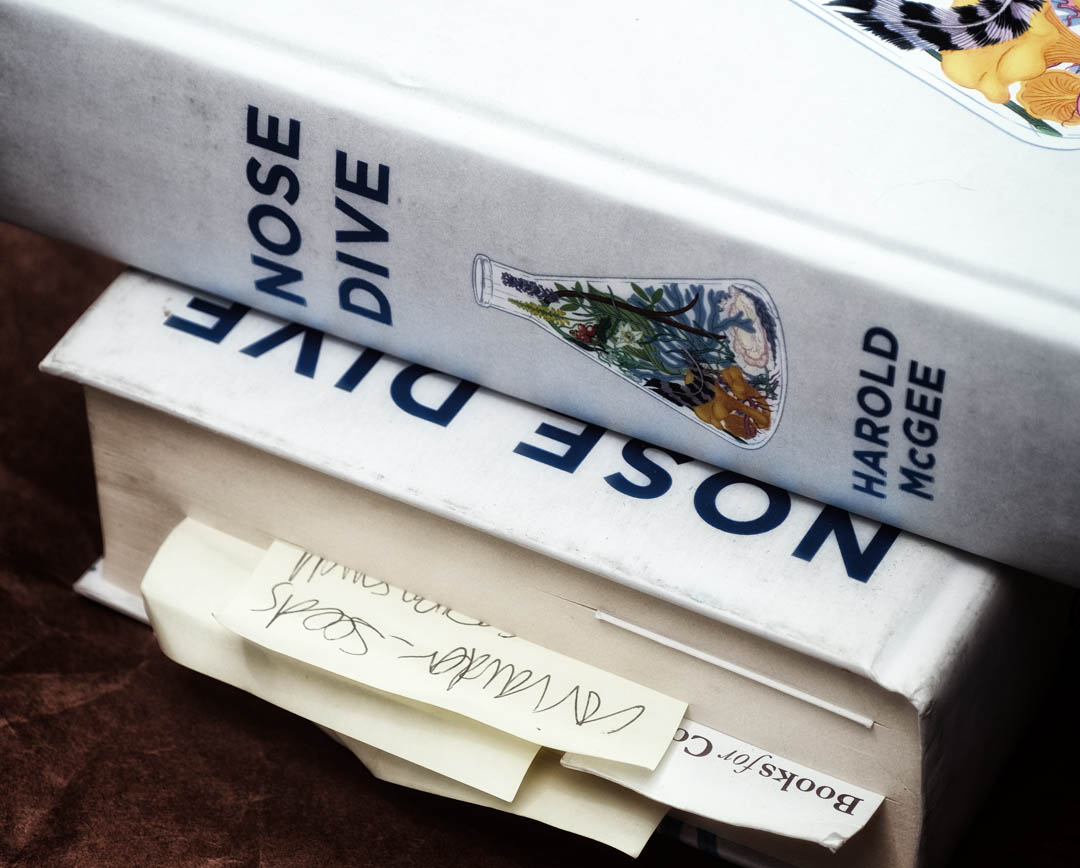
Harold McGee, in his remarkable work, Nose Dive: A Field Guide to the World’s Smells (John Murray/Penguin Press, 2020) describes the sensory world we inhabit as the ‘osmocosm’. He explains, ‘…from osme, the ancient Greek for “smell” or “odor”, with its inner resonance and hint of wizardly magic.’
In his work he explains—no, provides probable chemosensory reasons for—why we smell the things we do. Why the language we use—the descriptors we employ—not for wine exclusively, but the many other gorgeous and repulsive smelling things that we are stimulated to pay particular attention to, are received, learned, assimilated, and also intimately related.
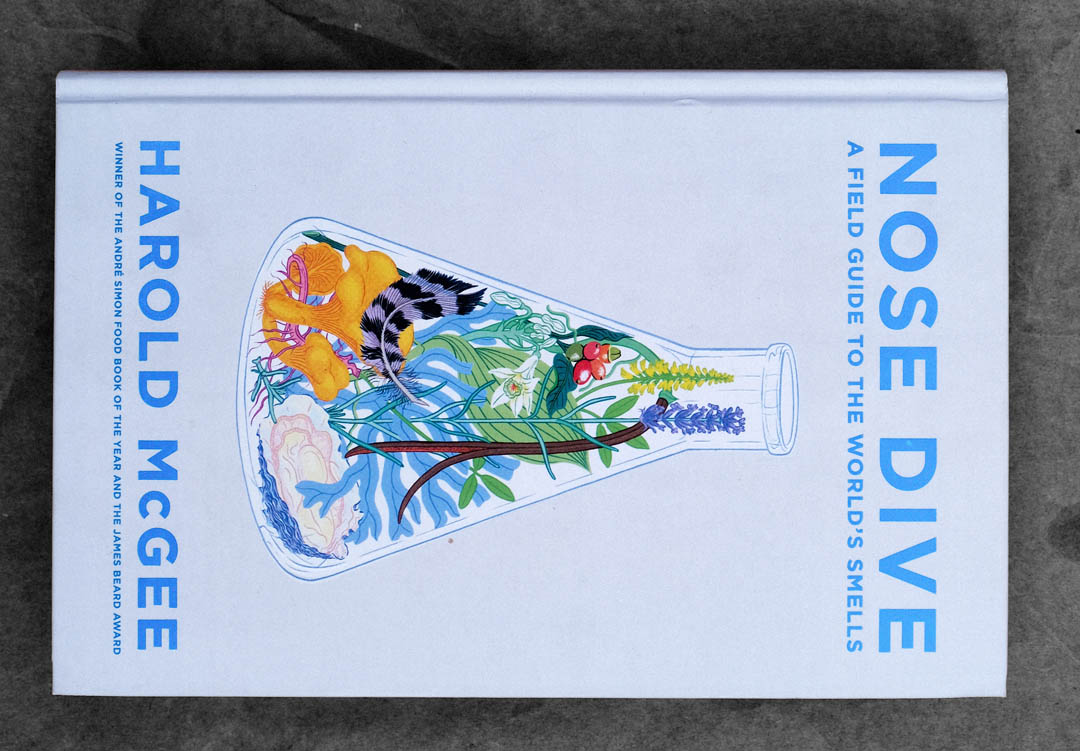
That I’m revisiting this story now, five years after I began falling under Nose Dive's spell, is that I still encounter winegrowers, oenologists, chefs, and others who adore things that they eat and drink, that have yet to hear of this incredible work. Let alone taken a plunge into its depths.
To recommence with a clarification that was included in the original version of this piece published in the Jan/Feb 2023 edition of Wine Business Magazine.
One individual on the AWAC of November 2022 was aware of—and indeed had invested in a copy of —McGee’s spellbinding text. This I learned at the conclusion of one day’s tasting proceedings when I referenced the text, as I had a copy in my hand that I was going to give to the participant who’d provided the most expressive and entertaining tasting note.
None of the other judges or participants had heard of Nose Dive either, nor anyone in the room representing The Australian Wine Research Institute [1].
A month or so prior to this gathering another winemaker of formidable knowledge and reputation—one whom I rate especially highly—acknowledged to me in a conversation that they were unaware of its existence either. They said , ‘This is what you’re meant to be doing, Tim. Writing about this sort of thing.’ As my original piece is not available online, this is another good reason to be refreshing it, and republishing it now.
So before proceeding I’ll emphatically reiterate the point I made at the end of that day’s AWAC organoleptic excursions: This volume should be in the tasting lab of every winery, brewery, and distillery. And it should also be on the desk of every wine marketer and copywriter seeking sensory inspiration — or assistance — in the composition of their next back label. On the bookshelf of any who care about what they smell and taste, and wonder how these experiences come into being.
A grouse in the house
McGee begins with an introduction to his personal osmocosm with a challenging dining experience. ‘I was completely absorbed, first by the intense sensation—a meatiness that was almost too strong to be pleasant, and edged with bitterness—and then by confused emotion. I was momentarily paralyzed (sic) unable to say a word to my tablemates. They looked at me with some concern, but then Fergus, smiled, nodded, and said: “Ah, of course. Your first grouse.”’ McGee is eating his first grouse at none other than the gastronomic shrine which is Fergus Henderson’s St. John.
One of most intriguing things as you delve through Nose Dive is how many things that repel us may also—in the right amount—attract us and contribute to pleasure. Like McGee’s first grouse, there were a couple of wines on the AWAC #55 that I’ll be most happy to never experience again.
I’ve written—in part—before that one person’s thiol, a whiffy organosulphur often encountered in wine, especially in pungent sauvignon blanc, is another person’s, “…sweaty armpit just out of the gym” (expressed in a desirable manner).
Alluring repellents
Indole, another intriguing compound which can be both attractive or repugnant depending on its intensity and sensory setting, is found in the florals of jasmine, but also in the faeces of humans and pigs.
Indole is one of these repellant and attractive compounds. It was once most evocatively described by someone on the AWAC as “…dank flowers in a vase.” Biophysicist Luca Turin [2], writing in his compelling sensory volume, The Secret of Scent (Faber & Faber/ecco, 2006) opines of indole that it is, “…probably the most maligned molecule on earth…”. It is certainly a compound not favoured by many winemakers, especially those of the tank-fermented bubbly kind.
There’s a paper/backgrounder on the topic titled, ‘Indole off-flavour in sparkling wine’ (Geoff Cowey, AWRI/Grapegrower and Winemaker, October 2020) concerning its maligning presence. Something particularly interests me in the many observations contained in this document: ‘The aroma detection threshold of indole is 23 μg/L; however, there is wide variation in sensitivity between individuals and some people are unable to detect the character at all.’
As indicated elsewhere in the piece thresholds to different compounds vary significantly, and appreciation or deprecation varies significantly also, influenced by the context and the company kept at the moment of the encounter.
Indole makes dozens of star turns in Nose Dive. It surfaces in the chapter Animal Bodies among the faecal skatole, putrescine, and cadaverine. It re-emerges in chapter four, The Human Animal, in a section with the endearing title, ‘The signifying smells of excrement’, where it is a component in the subject’s recipe, along with skatole, short carbon-chain acids, carbon-ring cresol, hydrogen sulphide, nitrogenous ammonia, and several more. You get the malodorous sensory picture.
Not surprisingly though indole is most abundant in the chapter on Flowers, where it is found in far prettier and more attractively perfumed company. Although not exclusively, it does also assert itself in a grubbier fashion alongside its sidekick skatole in the section, ‘Some smells emitted by flowers that attract Beetles and Flies’. McGee refers to the compound as ‘ambiguous indole’. I do wonder if those humans attracted to some wines’ ‘grubbier’ side find these kinds of florals more attractive than those beloved of purer perfume-hunting bees.
But indole also adds a component—confers a bass-level complexing character—to one of my favourite smelling (and looking) blooms, the Oriental lily. (Which’s smell in turn reminds me of Hoegaarden wheat beer, incidentally). Because maligned, ambiguous indole is included in the table of mixtures devoted to ‘Some Hyacinths, Tulips and Lilies’, following benzyl alcohol, benzaldehyde, benzenoid esters, eugenol, linalool, ocimene, and cresol.
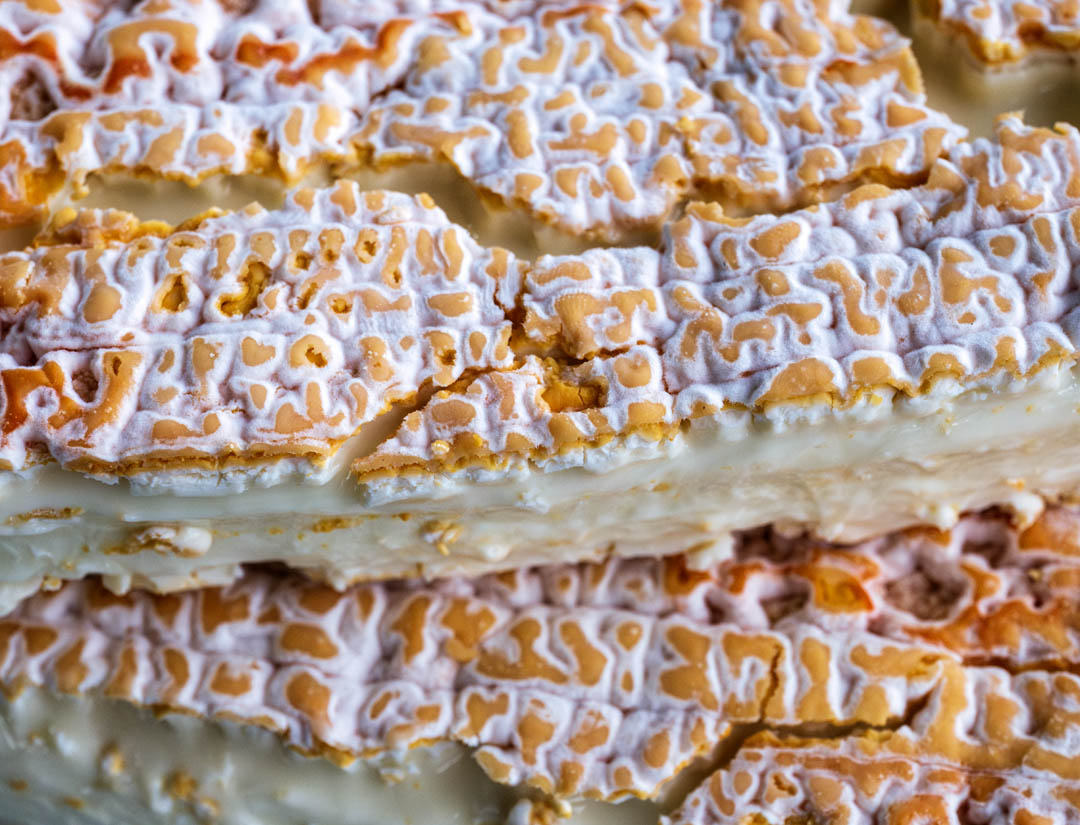
Brebirousse d’Argental in full bloom smelling of skatole, indole, fruity lactones, and vanillin. Pic: Tim White
Blooms of a different kind—mould and other things on the surfaces 0f washed rind cheeses—attract and repel with wafts of indole. My first serious close-proximity acquaintances with multifarious washed-rind and other surface ripened cheeses has really only come about since the commencement of my deli and occasional cheese bar duties at Fewvilleland, which began nine months after filing my original edit of this piece for WBM.
It was the waft of what I now know to be Brebirousse d’Argental, a washed-rind ewes’ milk cheese, that I really attracted me. The grubby allure I mean, with the skatole, indole, and fruitier lactones and vanillin of sheep milk, all having an influence in the cheese’s aromatic profile. It tastes sweeter and creamier than it smells.
Listed in the table of, ’Some Surface- And Vein-Ripened Cheeses’ in the chapter ‘Cured and Fermented Foods’, McGee lists the even more pungent Époisses, Munster, and Limburger as prime examples of the type, with hexanoic and methylbutiric acids, and dimethyl disulphide dancing with indole at the pong party.
In the ‘Cheesy Feet’ section of ‘The Human Animal’ (Chapter 6) he expands on Limburger’s role as a decoy for ‘…the malaria-carrying mosquito, which tends to feast on human feet and ankles…’. Dutch scientists connected the ‘olfactory resemblance’ between tenenkaas (‘toe cheese’) and Limburger in 1996 apparently, and published a paper about it accordingly.
Tables—so many, many of them—populate the breaks within the chapters of Nose Dive’s narrative, which makes it both an invaluable quick reference sensory handbook, as well as a place to immerse yourself deeper as you get sucked into McGee’s odour cosmos.
But Nose Dive is not all about grouses, faeces and faded florals; distinctions and connections are made between many delicious things that most of us delight in.
Berries and Bananas
Sniff out the compounds furaneol and hexanal, for example, and discover why one person’s pineapple-smelling Gin Gin or Mendoza clone Chardonnay, is scented with strawberries under someone else’s nose. As McGee writes in ‘Fruits’ ‘…it was a new hybrid strawberry’s aromatic resemblance to the pineapple that suggested its botanical name, Fragaria x annanasa, and that resemblance was and is real.’
This I note as a particularly Thai baby pineapple-to-me-smelling 2019 Hardy’s HRB Chardonnay D687—a blend of fruit from Pemberton, the Yarra Valley and Margaret River—I once stuck out of curiosity under my young daughter’s nose. She responded immediately with ‘strawberries’.
I was particularly interested in her reaction because as she was way too young to taste the wine—she still is—I knew she would be uninfluenced about how the wine looked. By its colour I mean. I emphasise—she only smelled it.
I’d only made the aromatic connection between strawberries and pineapples myself in the mid-2000s when one morning I perplexingly smelled pineapple while raising a cup of Assam to my lips. It was only around half an hour before that I’d eaten strawberries at breakfast. As soon as I recalled that, the sensations spun colourfully around in my brain like Remy’s Tomme de Chèvre, rosemary and saffron moment in Ratatouille.
There was no Nose Dive to hand back then, but I did possess McGee’s other terrific gastro-scientific masterwork, On Food and Cooking (Revised and Updated Edition; Scribner 2004), and Food Chemistry (3rd Revised Edition; H.-D. Belitz, W. Grosch, and P. Schieberle; Springer-Verlag, 2004). It was in was in the latter edition that the two fruits’ aroma impact-compound similarities were validated.
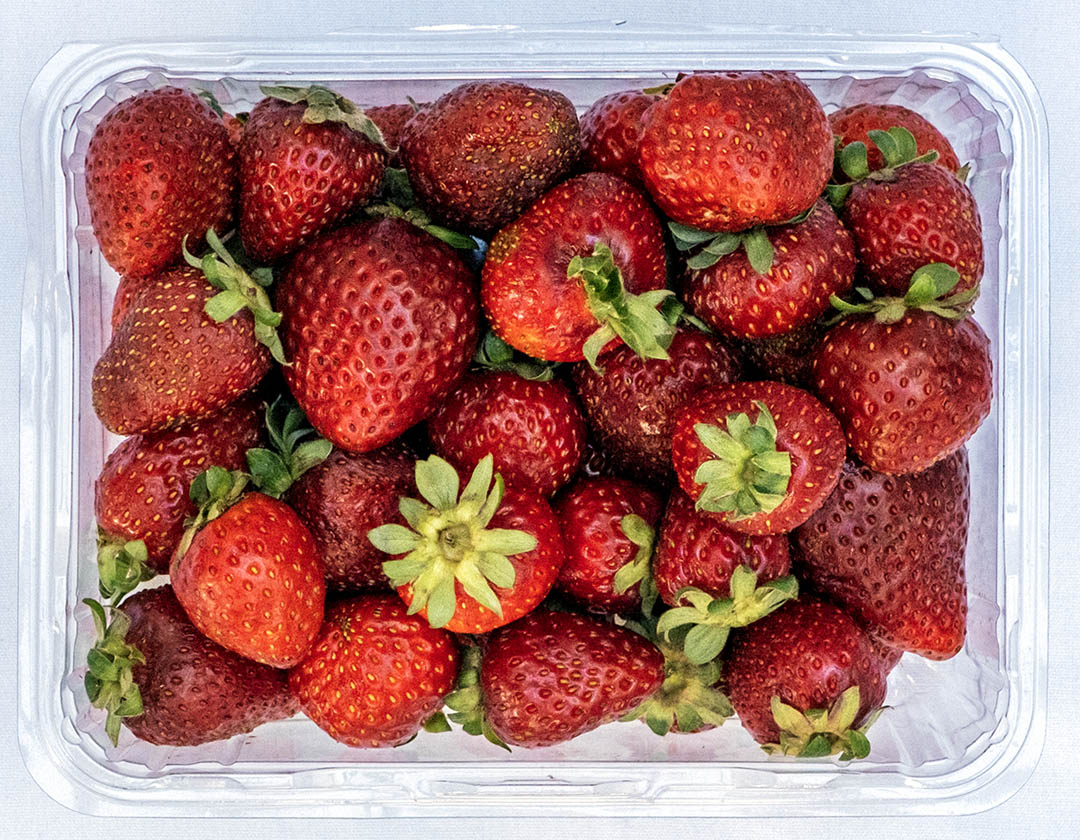
Imperfect strawberries—‘seconds'—from Tivodi in Lobethal, but they smell and taste divine. They are seconds because of their irregular shape and uneven size. Which apparently matters to some people more than their flavour. Those people would be right at home alongside some on the Advanced Wine Assessment Course—and elsewhere—who diss Nebbiolo simply for how it looks. Pic: Tim White
Spices and Mices
Rotundone, a compound which the Australian Wine Research Institute has made a significant research contribution to understanding, spices things up in chapters 8. ‘Plant Volatile Families: Green, Fruity, Flower, Spicy’; 9. ‘Mosses, Trees, Grasses, Weeds’; 10. ‘Flowers’; 11. ‘Edible Greens and Herbs’; 12. ‘Edible Roots and Seeds: Staples and Spices’; 17. ‘Fragrances’; 18. ‘Cooked Foods’; and, of course, ‘Cured and Fermented Foods’. (These listings from the ebook edition as they’re not all indexed in the print version).
Rotundone—McGee describes it as ‘woody-peppery’ contributing to the aroma of black and white pepper, marjoram, rosemary and Syrah/Shiraz—is a compound that not everyone can identify. A figure of as many one in four was quoted as being oblivious to rotundone’s charms according to the paper ‘Do you taste what I taste? Why training cannot overcome biological differences in perception’, presented by Dr John Hayes Penn State University at the Australian Wine Industry Technical Conference in 2016.
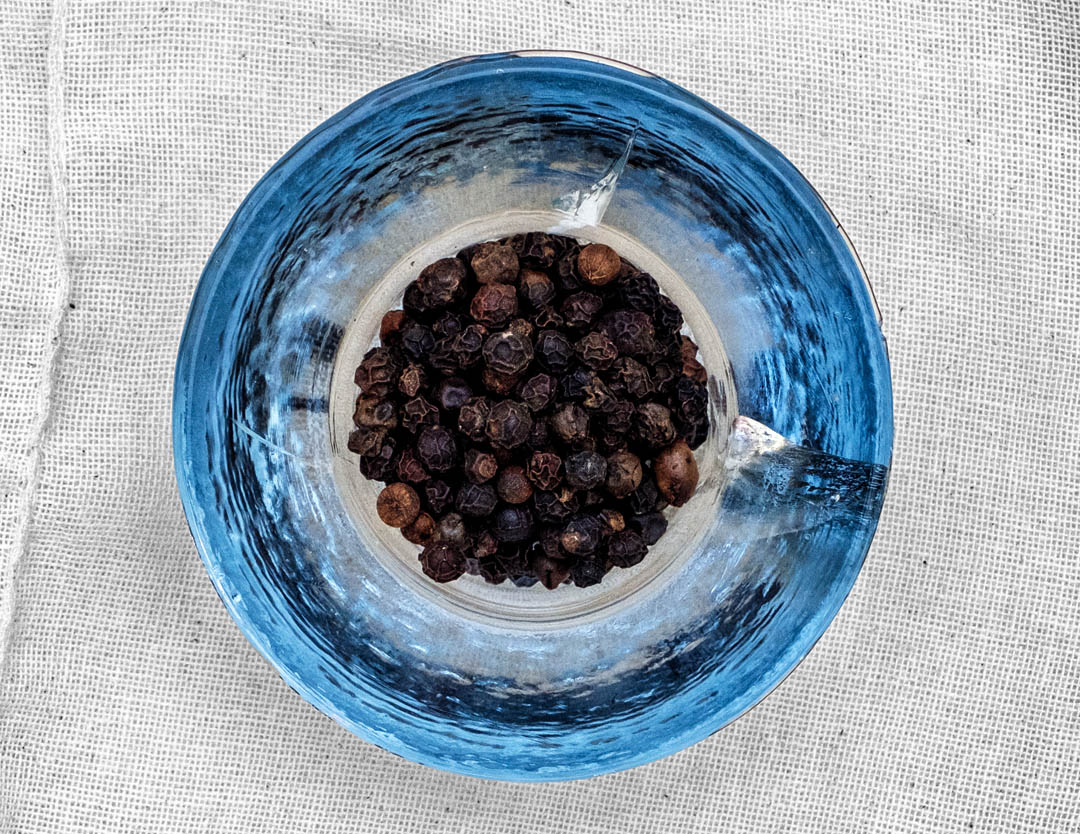
Beach Organics rotundone-loaded Muntok black peppercorns. Pic: Tim White
Hayes also cited coriander—cilantro, the fresh herb—as another familiar and adored flavour experience for many, where there is significant chemosensory variation among the population. For some—as many as one in five—find the taste of it soapy and simply abhor it. As Hayes put it during his presentation: ‘My contention is that no amount of training can ever make up for fundamental biological differences.’
Being deuteranomalous—that is someone with red-green ‘colour blindness’, a genetic predisposition which affects 5-7% of Caucasian males (almost exclusively)—this is something I totally get. No amount of ocular training—or prompts from irritating individuals pointing to something red against a green background in the distance, and insisting I must be able to see it as they do—will enable me to rejoice in the subtleties which I understand to abound within the gamuts of the widest colour spectrums.
To me most shades of pink will appear as grey forever, and when cherries on a tree begin to ripen and colour-up I do not—never will—distinguish the early ripening hues of the fruit against the green leaves of the tree as it spring turns to summer. But I’m pretty good at scenting the blossom, and capturing key cherry compounds in things—McGee cites hexanal, benzaldehyde, eugenol and many others. And at sensing cherry characters in certain styles of wine.
When judging on the AWAC [3] I’d routinely make mention of my deuteranonomly at the beginning of any session, as so many in the room were fixated by colour and the visual clues it indicated as to quality and condition. How the wine landed on the eye, I mean.
There was certainly nothing much that I could ever shed light upon in matters of a wine’s colour. I remember in one session encountering an especially delicious blackberry—red—fruited pale bubbly which featured in a bracket of méthode traditionnelle sparkling wines. I has to ask one of the other judges if its was pink as I was uncertain of its hue. It was. An NV Billecart-Salmon Rosé it turned out to be and I gave it a gold—for how it smelled and tasted, not its divine shade of pink.
Across two and a bit decades many decades I’ve lost count of the number of participants who’d point down a Nebbiolo because it didn’t conform to the intense hues of so many ‘traditional’ black grapes of French origin more typically grown in Australia.
This is no doubt—in part—why I rejoice in Nose Dive as much as I do. The hue of fruit and vegetables barely warrants mention—if any. It is a book about smell and taste. The complexities that can be perceived by these senses: it is never about the colour of the skin.
As I’ve more than once suggested to participants on the course and elsewhere: do you have to smell a fucking painting to fully appreciate its beauty?
The mouse in the room
I’ve shot laterally on the matter of chemosensory variation as one winemaker participant on AWAC #54 informed me that they couldn’t detect rotundone. Yet this individual had a particularly low threshold and strong aversion to mousiness: a sensation that would make them feel like dry retching. As a result they don’t enjoy corn chips, most beer, fino sherry, or vin jaune.
This discovery—and conversation—came about after tasting a bracket of mixed whites in which a vin jaune was included. I rated it highly as an example of the style, but the participant with the extreme mouse aversion slammed it. (We learned that it was a 2012 Rolet Père et Fils).
Somewhat condescending I asked—suggested even—that they didn’t have much familiarity with the style of wine (it was in a blind mixed bracket, as all wines on the course are presented to judges and participants). I was politely informed in response that this was not so, and this is how we got onto the matter of mousiness. And subsequently rotundone. According to Paul Grbin of the University of Adelaide, palate pH may have a good bit to do with perception thresholds of mouse.
Interestingly, there’s barely a sniff of mouse in Nose Dive—and a third of even experienced tasters don’t identify it anyway—except in the section Changeable Urine. Although compounds which signify its presence—such as acetyl pyrroline and acetyl tetrahydropiridine—do appear in Cooked Foods (including duck) and, of course, corn—a.k.a. maize—products.
Corny Conclusions
And here’s a thing—not so long ago—one morning, shortly after getting out of the shower, I was convinced I caught the whiff of mouse as I departed the bathroom.
While I found no mouse on the stairs as I followed my nose, there at the foot of them, on the table in a bowl, were two opened packets of white and yellow Mission Tortillas. These were the leftovers from a ‘half-blind’ triangular taste trial Willa and I had been conducting the evening prior. To ascertain whether we could discern any taste differences sight unseen.
One of the three N-heterocyclic mousiness marker compounds ACPY—namely acetylpyrroline—is indeed listed by McGee in the table, ‘Some Cooked Versions of Corn’, along with many other complex sounding and smelling things that are both attracting and repelling again.
To reiterate: Nose Dive is a peerless research volume which should be in the tasting lab of every winery, brewery, and distillery. And behind every bar—I bought copies for three hospitality venues I used to be involved with. It should also be on the desk of every wine marketer or copywriter seeking sensory inspiration—or assistance—in the composition of their next back label or EDM.
As well as on the bookshelf of anyone who cares about what they smell and taste, and wonder how remarkable flavour experiences come into being in the osmocosm.
Keep one beside the loo too, to dip into when you’re considering the connection between poo and the perfume of the jasmine in your air freshener. Tip: head to Chapter 10, ‘Flowers’, and then to the heading, ‘“Dirty” notes in white flowers: ambiguous indole”.
Plunge, tumble, drench, saturate yourself in Nose Dive’s sensory vortex. Because Nose Dive is—simply put—totally grouse.
Nose Dive: A Field Guide to the World’s Smells (John Murray/Penguin Press, 2020)
While Booktopia still list the hardcover as being available, you might be better off searching for a second hand copy. Even more useful is the ebook which is fully searchable and an amazing resource to have access to across all your devices.
Written, revised, and published by Tim White, September 2026
Nose Diving
Altera Terra Murrumbateman Syrah 2023 (Canberra District, NSW)
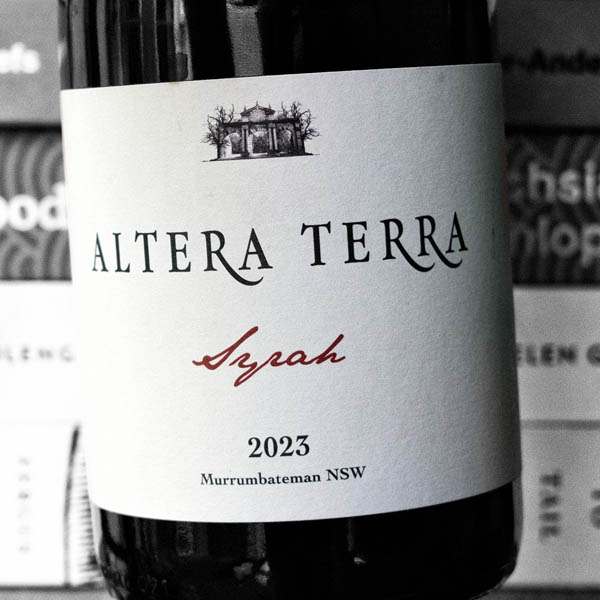
Fine spice in here—purest black pepper-like spiciness—among sweet smelling forest berry sweetness. And cherry morello pie and crust—short crustiness. Blood plum sage. Sensational exuberant fruit on the palate also; there's blood plum blood orange (candied), cane berry pips and sweet, cured meaty sapidity. Has an easiness and wetness to the tannin, which carries loads of exuberant sweet/sapid fruit flavour. At least for the first two thirds, because it does dip a bit in the last. But there’s lots of fun forest pippiness to suck on with a fudgey mouth-aroma waft or and transitory Aussie sous bois which is entirely positive and adds character. Squeezy forest pips warming on red rock. 92/100 (e) - 9/10 (h) - 😋😋😋 - $45 cellar direct.
As you can see from my review I reckon this wine is fabulous, it’s just the slightly abrupt finish that precludes me scoring it higher on my - (e) - empirical scale. But I’d polish off more than a glass or two of this daily basis were it to hand.
The rotundone here is pure and intense. That’s if it’s a compound you were born to able to enjoy, as not everyone perceives it.
If you don’t feel like digging deep into your pocked for an ebook edition of Nose Dive—but I do recommend it—there’s a piece on the matter of its discovery and significance—in peppercorns and Shiraz-Syrah—by McGee in his Curious Cook column for the New York Times here.
Yabby Lake Single Vineyard Pinot Gris 2025 (Mornington Peninsula, Victoria)
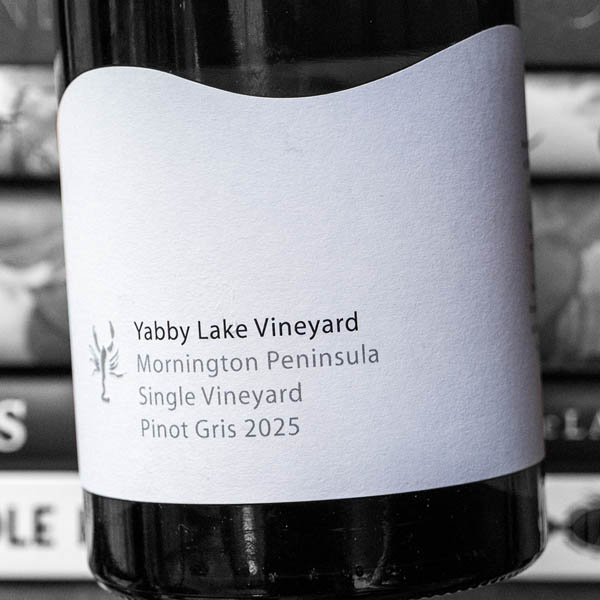
Plump smelling in a really good pear bavarois way. But there's tightness too, in the peel it contains: dehydrated Meyer lemon rind tang. Gathers bittersweet quince* paste aromatics too. So just a touch perfumed: broad bean blossom. Fabulous sharp slinky juiciness on the palate, with easy going acid melt and just the right amount of pear skin grip. Not especially complex, although the pear texture granularity is beguiling. Crunchy, grippy, then juiciness releases. A great mix of textures. Which is the primary reason for rating this so highly, really—fabulous, fabulous texture. 94/100 (e) - 9/10 (h) - 😋😋(😋) - $39 cellar direct.
'Subversive’ is how Kathleen Quealy once described Pinot Gris / Grigio to me back in the day. This when she and hubby Kevin McCarthy were among just a handful of advocates for the grape variety in Australia. But it was they who pioneered Pinot G on the Mornington Peninsula under their T’Gallant label.
In those early days—we’re talking the mid-nineties here—there was much misunderstanding even among winemakers as to what constituted—style-wise—Gris or Grigio. When I began putting the Pinot G classes together for the Australian Alternative Varieties Wine Show in 2001 confusion still abounded. So I divvied it up into two classes: one being for crisper cruncher Grigio styles such as one might encounter from North-East Italy; the other for more luscious types with maybe a bit more textural grip such as be found in Alsatian Gris. That was the idea anyway. Wines were still submitted incorrectly.
It was McCarthy who prompted the Australian Wine Research Institute to investigate the Gris Grigio conundrum and provide a consumer-friendly device to assist in differentiation. So began the PinotG Style Spectrum project which was launched in 2010. According to the presentation at the time: “The fundamental question was; “could wine style be accurately measured and then predicted using laboratory analytical techniques?”
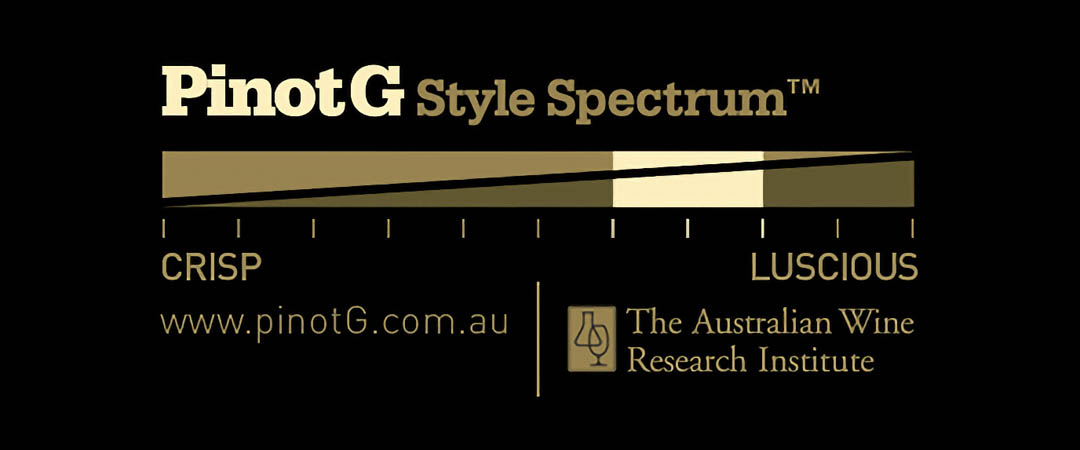
As always, the AWRI figured out a way how and they came up with the helpful wine label visual above to indicate what style of wine lie inside the bottle. It was trademarked and everything, and there was even a website dedicated to the services' provision. It was me incidentally that coined Pinot G—in print and at the AAVWS at least—not that I was officially acknowledged for it.
Nor does any of this really matter now—except academically—as the spectrum never really caught on, although the grape variety most certainly did and it graduated the AAVWS a long time ago. If you click on the web address it does still take you to the AWRI.
Today, McCarthy presides over a fun-packed alternative varieties-themed project called MDI; Kathleen, of course, established her own eponymous venture at Balnarring, where their son Tom now attends to wine philosophical duties. While ‘pervasive' might now best describe Pinot G I’ve still got lots of time for the best examples of any style.
This delicious 2025 Yabby Lake Pinot Gris is most definitely on the righter side of the spectrum—in texture, not politically. Not quite luscious, but definitely somewhat luxurious.
If this has piqued your PG interest, you’ll find the graphic and explanatory detail here.
The distinctive perfume we assign to waxy-furry quinces to Nose Dive. Farnesene. What is it that quinces smell like?
Longview Macclesfield Cabernet Sauvignon 2023 (Adelaide Hills, SA)
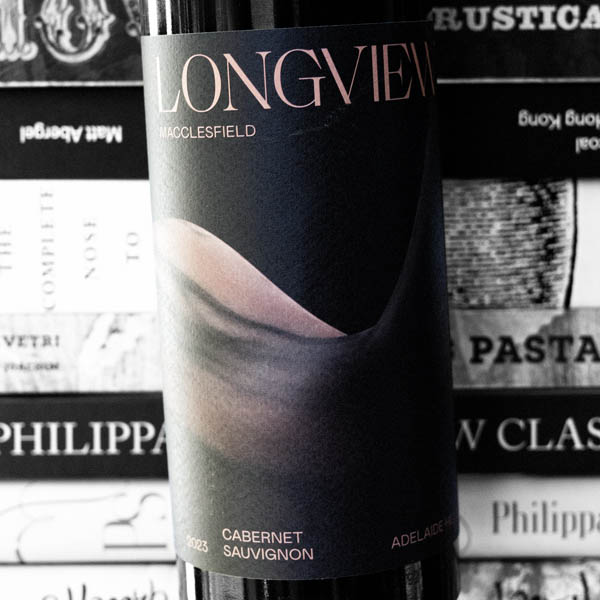
Leaf and bitter peel lead as it opens, accompanied quite soon by bitter chocolate and then blackberry-currant too. Although it’s more edgy blackberry, but does have classic flake tobacco pyrazine also. Complexing components one and all, mingling more with time in glass. There’s also a surprise waft of bergamot* into frankincense. With all described above, I was expecting w a slightly leafy edge to the palate also, but it’s all about juicy-edgy forest berry fruit sweetness. And mouth-aroma reverbs of the citrus peel on the nose. The tannins have just the right weight of austerity about them and juxtapose the loganberry pippy juiciness perfectly. It get’s chocolaty as it warms on the tongue; even a bit like salted chocolate, actually. And there’s a tweak of anise arising as it sits which is always a good thing to see in cabernet sauvignon**. Leads you in slowly. This is packed with surprises. 94(95)/100 (e) - 8/10 (h) - 😋😋 - $48 cellar direct.
*Tea leaf of the Assam kind I’ve often deployed as a descriptor in Cabernet Sauvignon, so maybe I’m suggesting here Earl Grey? The citrus bergamot orange—real oil is used in the finest examples—distinguishing this strange, but distinctly English camelia sinensis brew.
Or perhaps I’m channeling this cabernet sauvignon’s Italianate-ness? As not for the first time when I’ve encountered other vintages of the cultivar from this vineyard in my half-blind lineups I’ve been reminded of wines I’ve happened upon from the Tuscan coast. And the finest bergamot is generally acknowledged to be grown in Italy. Although further south in Calabria.
Or perhaps it’s borrowing aromatic influences from the nebbiolo which is planted alongside it on Longview’s ‘Vista’ hillside? The frankincense observation is certainly one I most frequently encounter in nebb, and the nebbiolo of the south, Aglianico.
**Anise is a classic cabernet descriptor, however—as is liquorice. As the polymath wine legend who is Randall Grahm once philosophised, over a glass of 1982 A.P. Birks Wendouree Cellars Malbec Cabernet Sauvignon a small group of us were much enjoying many years back, ‘The quality of liquorice in wine indicates that it is in harmonious balance.’
And this cabernet sauvignon is most certainly in tune too. It ain’t quite up there with the completely sublime ’21, but I do rate it a smidge higher than the ’22, with which it shares remarkable aromatic similarities. A wine in which I noted, ‘…a Chianti thing.’
Perhaps when I encounter this in any future local examples of the cultivar I should swap it out with, ‘…a Macclesfield thing’.