A Case for Australian Claret
It was claret of the French kind—medium to full-bodied red from Bordeaux, founded around the cultivar cabernet sauvignon and other companionable black grape family members—to which I first headed. This after a little learning, following a genuinely epiphanic wine moment encountering an ’82 Fitou—a syrah-grenache blend from south-west France—for the first time.
It was handed to me at a drinks party by a friend, accompanied with an effusive endorsement. I'd have probably been pondering a Fuller’s ESB or Theakston’s Old Peculier at the time. Or something other in the ‘real ale’—‘craft beer’—realm. Because I didn’t drink wine (until just exactly then).
Inspired by the Cuvée Madame Parmentier Fitou my friend Karim had entreated me to give a go, a really good book about wine was the request to my dad for Christmas. Hugh Johnson’s Wine Companion (1983, Mitchell Beazley) was eagerly received and with it vinous exploration and education began. One of Johnson’s concise, exquisitely-formed sentences still sounds a compelling invocation: ‘The wines of Château Haut-Bailly are like long simmered stock: I love them.’ (I don’t have the edition to hand, but I’m sure this is the gist.)
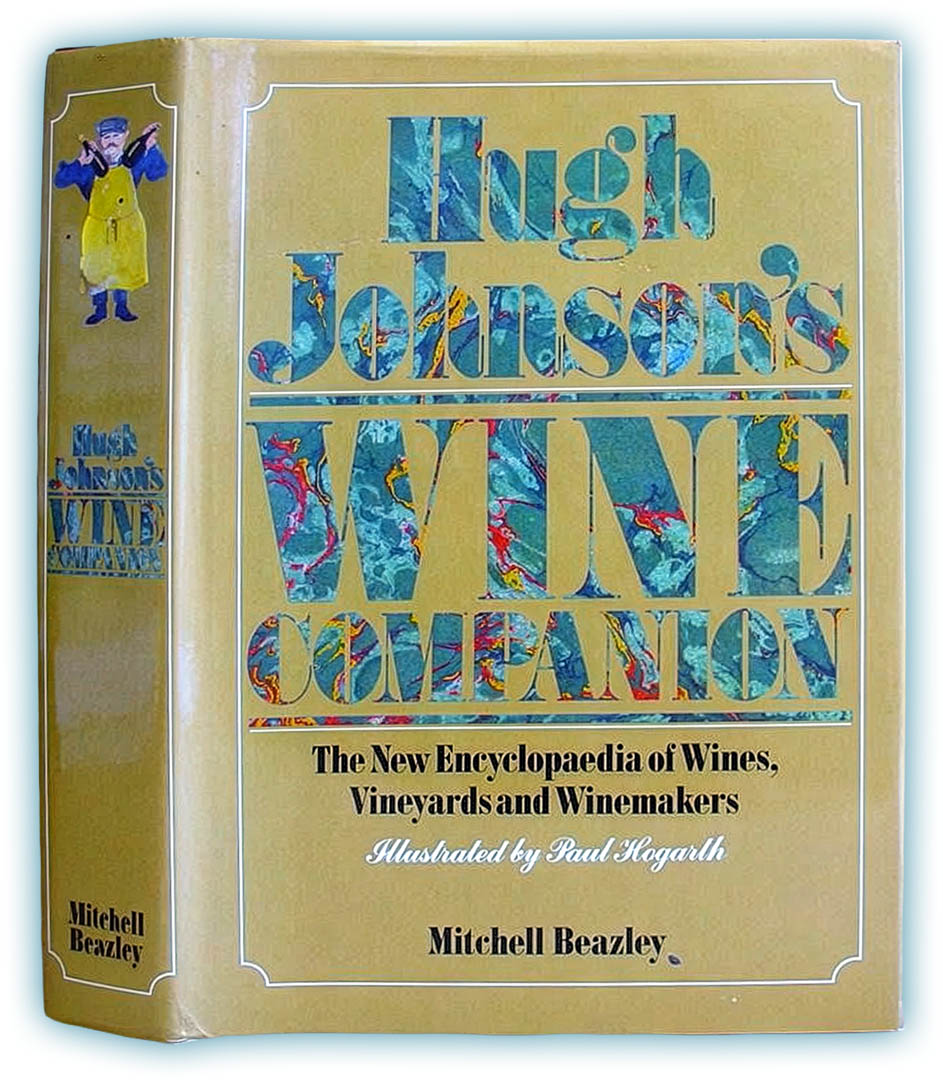
© Hugh Johnson, Paul Hogarth, Mitchell Beazley, 1983
Now, so-called ‘lesser’ vintages of Haut-Bailly were readily procurable at the time and—most importantly—affordable for me at a central London ‘bottlo’ of my newly formed acquaintance. I duly acquired two bottles of the ’79, extracted the unpredictable thing I now know a natural cork to be from one of them, and totally got why Johnson was so enamoured.
After a short period enjoying other modest examples of the French kind I found myself pondering Aussie claret also. What got me seeking out these reds from such a far flung land I can’t exactly recall but, most likely, it was stimulated by Johnson’s equally evocative and informed words on the matter of Australian wine in this same peerless volume. (His first visit to these shores I now know to be in 1974—see below).
However, it suddenly popped into my head while re-researching and recollecting further for this revision of my original piece (commissioned by Xavier Bizot of Terre à Terre), that it was almost certainly words of wine advice from essayist Auberon Waugh also. Because back in the day, Waugh—son of literary great Evelyn Waugh*—penned a column on matters vinous for The Spectator, which the aforementioned Karim (Niazy) had also prodded me towards.
Curious Claret Coincidences
In his collected cerebrations, ‘Waugh on Wine’ (Fourth Estate, 1986) I found an article titled, ’Strine Wine’. He writes most fondly of a number of Australian reds which had been organised for him by then Australian senator, the Hon. Amanda Vanstone A.O.

© Auberon Waugh, Willie Rushton, 4th Estate, 1986
In the piece Waugh speaks most positively of ‘Brown Brothers' Koombahla Cabernet’, ‘Penfold’s Coonawarra’, and more specifically, ‘Smith's Yalumba 1978’. A little later in the story he also nominates a 1979 Leasingham Bin 56 Cabernet Malbec as being ‘the best I know’ of the style from South Australia, and of the 1978 Yalumba Signature Reserve Cabernet Shiraz he opines ‘…another memorable South Australian experience.’
It was inconceivable back then of course, when I may have first encountered these words, that my recently begun wine journey would one day find me wandering the vineyards of the Alpine Valleys of Victoria, the terra rossa strip of Coonawarra in South Australia, and the hills and vales of the Barossa, which three regions grew the lauded roll call of fine Aussie clarets cited by Waugh in this prescient piece published over three decades ago. And when landing in Sydney, why would I possibly ponder that one day—actually for almost a decade—I’d be residing in the Clare Valley which was home to Leasingham’s legendary Bin 56?
Now, as crazy as it now seems given its supermarket ubiquity today in the U.K., one needed to search out stockists with decent selections of Australian wine in the mid-eighties. Two speciality retailers I sought out were Ostlers, on the periphery of the so-called City, and Findlater—I think was the name—in St. John’s Wood, or thereabouts. Curiously, neither of these appear in the list of ‘Wine Merchants’ on the pages which conclude Waugh’s collection of essays.
It was at the latter merchant where I discovered my first Aussie clarets: Brown Brothers Koombahla (I think it was — or possibly Browns’ Meadow Creek Shiraz Cabernet Sauvignon); and a certain Penfold’s Bin 389 Cabernet Shiraz which—fairly obviously—still enjoys a reasonable reputation today.
Neither of these wines were labelled ‘Claret’ although I’d learn (much) later that 389’s stablemates, St. Henri and Koonunga Hill, were labelled as such until the 1989 and 1991 vintages respectively. The last Browns Brothers' bottling from the Darling family’s Koombahla vineyard was a 1996 Cabernet Sauvignon; the last carrying the name of the Levine family’s Meadow Creek vineyard was an ’88 Shiraz Cabernet.
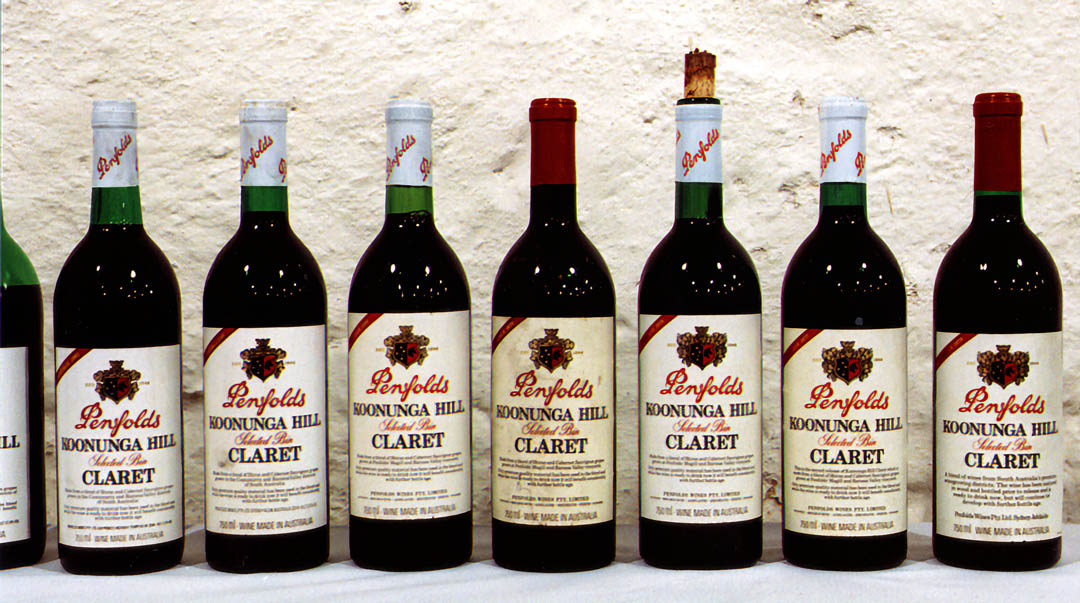
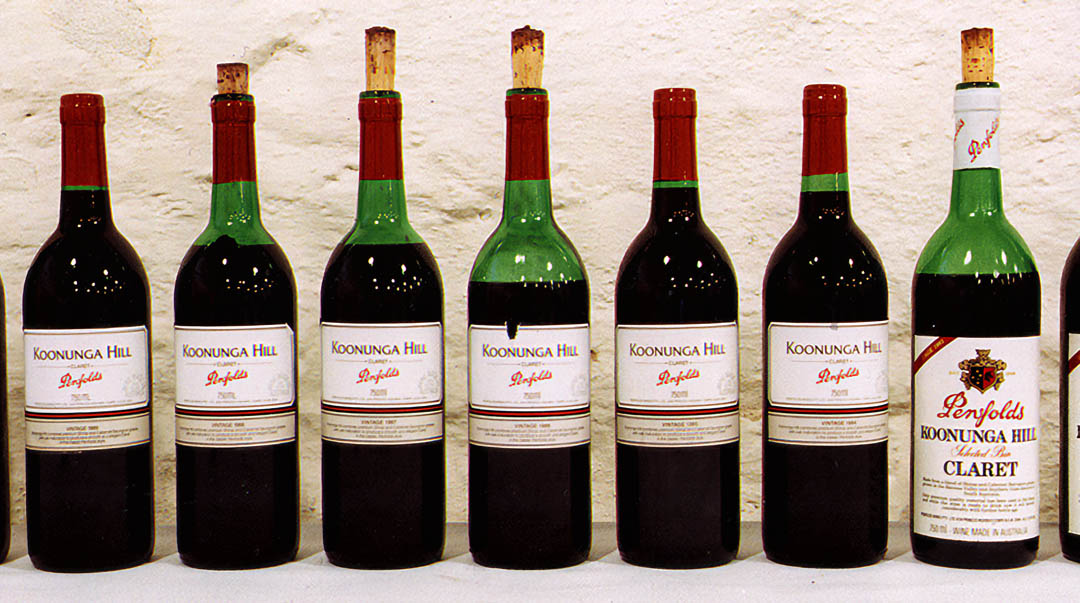
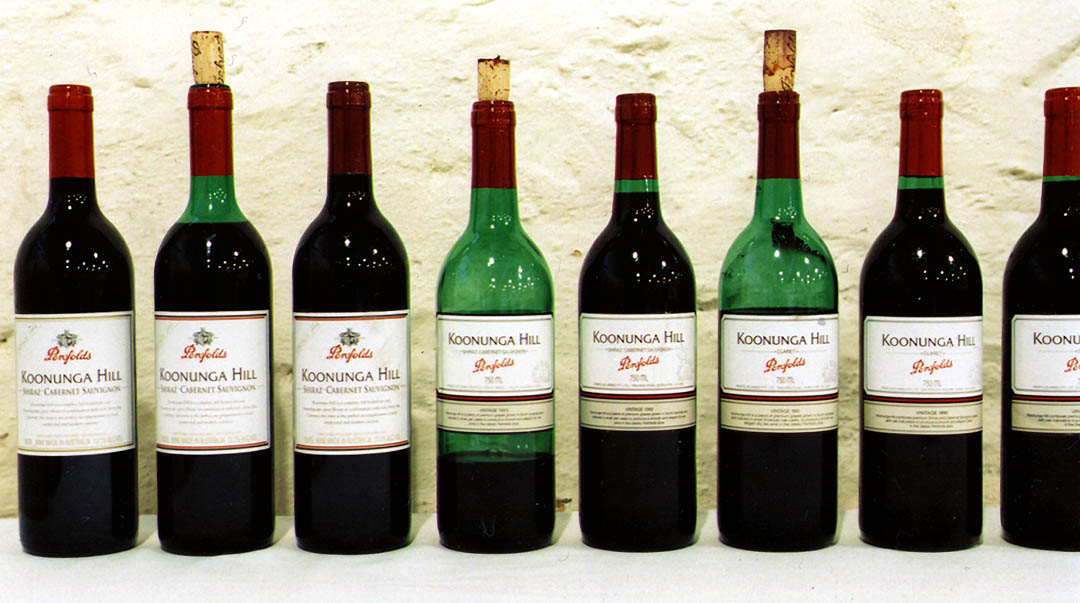
Once was Penfolds Koonunga Hill Claret. Pics: Tim White
After dusting off the jacket of my rediscovered ‘Waugh on Wine’ edition and subsequently re-reading ‘Strine Wine’, I also gave Rick Kinzbrunner of Giaconda a call. Why? Because Kinzbrunner was a winemaker at Browns at the turn of the eighties. I was also aware he’d spent vintages in the Napa Valley, California.
This detail I include because weirdly—seriously weirdly—there’s an observation in Waugh’s essay which references a 1980 Brown Brothers Chardonnay that, ‘…seemed, in 1983, to beat anything I had tasted from the Beaune region for a very long time. It had all the fruit and spice of a Montrachet or a Corton-Charlemagne with the undertones of butter, flint and cigar smoke which one finds in the best Californian Chardonnays.’ It’s a remarkable call in many ways. There’s no way Waugh would have known of Rick’s Californian sojourns.
But claret was the primary motivation for the communication with Kinzbrunner. Could it be possible that it was he who presiding over those Browns’ clarets that inspired me all those years ago? Yes, it certainly was! Strewth! While we were talking he went to his cellar and fetched a bottle of Koombahla reserve which was the first wine at Browns to ever see new French oak—it also was a 1980. So, triple freaky, and serious ‘weird wine shit’.
New French Claret
Returning to its beginnings it would appear that claret—such a comforting English word for a medium to full-bodied red—first entered wine vernacular in the early 1700s. According to Professor Tim Unwin’s, Wine and the Vine, An Historical Geography of Viticulture and the Wine Trade (Routledge, 1991), the ‘Book of Expenses’ of one John Hervey, first Earl of Bristol, lists numerous illustrious entries.
In 1703 the purchase of ‘…a single hogshead of “Margoose claret”…’. In 1720 ‘La Tour Claret’, while ‘La ffittee Clarett’ in 1721 and 1724 sold for £43 a hogshead. ‘Obrian’ (Haut-Brion) was also on the Earl’s shopping list to the tune of four hogsheads. Unwin writes that these wines were known at the time as ‘New French Clarets’. This use of claret is is not be confused with the short fermentation, stylistically quite different wines known as vinum clarum, bin clar, and clairet, although the word claret is derived from the latter (these details also courtesy of Unwin’s remarkable treatise).
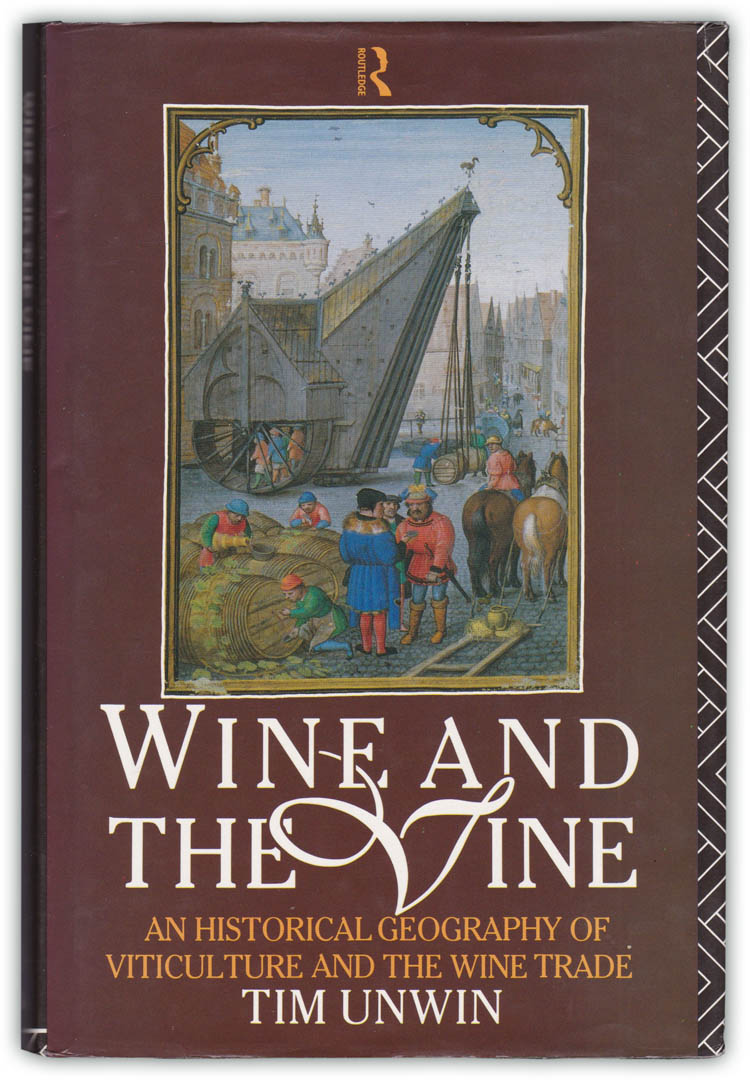
© Prof. Tim Unwin, Routledge, 1991
So we now have Claret, such a quintessentially—and endearing—British wine trade word, which still appears on merchant and supermarket labels in the U.K., being determined particularly as red wines of Bordeaux. But the concept of claret travelled far further, and little wonder the style and name emigrated south when the grapevine and culture of winegrowing journeyed to Australia.
The entry on claret in ‘…the greatest wine book ever published…’, The Oxford Companion to Wine (5th Edition) (Jancis Robinson and Julia Harding, with Tara Q. Thoms (eds.), Oxford University Press, 2023) makes this observation: ‘Claret has also been used as a generic term for a vaguely identified class of red table wines supposedly drier, and possibly higher in tannins, than those sold as generic burgundy (although in the history of Australian wine shows, it has been known for the same wine to win both the claret and burgundy classes).’
New Australian Claret
When I ventured towards Australian shores in 1987 my new-found friendship with Aussie claret of the Cabernet Sauvignon Shiraz (and vice-versa) kind burgeoned, despite the almost relentless enthusiasm for mono-varietalism all around me. From this time two wines spring to mind, albeit for quite different reasons.
One is Wirra Wirra’s Church Block Cabernet Sauvignon Shiraz Merlot which was then ubiquitous on Sydney wine lists, especially in pubs of the gastro-kind. At lunch in one such Balmain boozer a waiter presented us with the bottle of same for inspection, but not before flipping the bottle juggler-fashion into the air, catching it with the opposite hand, and then flamboyantly pulling the cork. ‘Cocktail claret’ I thought: Bryan Brown and Tom Cruise had a lot to answer for.
Then came a somewhat more serious sensory revelation which arrived courtesy of a particularly generous guest at a backyard b.b.q. in Bondi Junction. It was the experience of a sublime Brokenwood 1985 Hermitage Cabernet Sauvignon. It was quite exceptional—thought provoking as well as sensorially enthralling—and the first ‘serious’ red vividly recollected from my early Australian years. This was a while before I began working in the trade and then later again began writing about wine.
Later learning had lead me to believe that this stellar Brokenwood claret was a classic Hunter Coonawarra blend, as I’d encountered a few composed similarly along the tasting trail. But I’d assumed incorrectly: because the cabernet component was also of the Hunter, from none other than Brokenwood’s Graveyard vineyard in Pokolbin, a place of hallowed ground for shiraz in Australia.
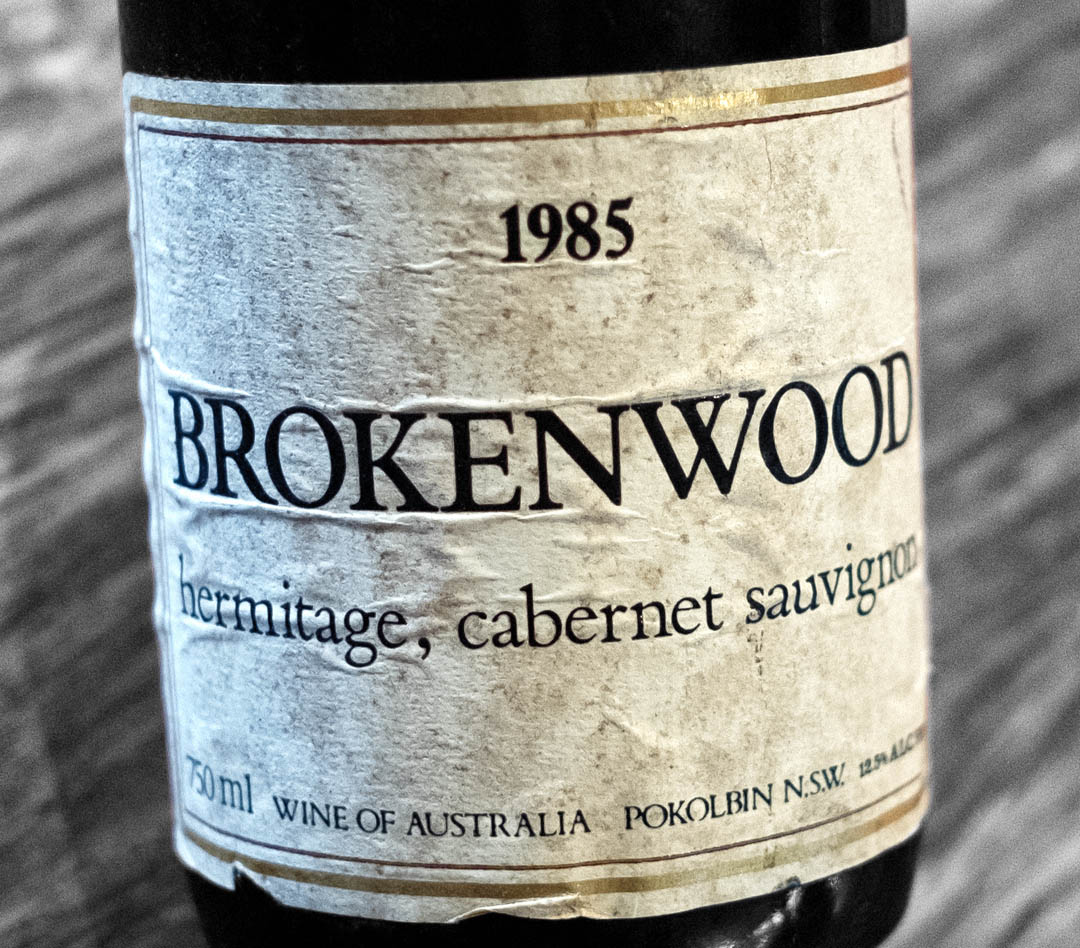
Only ever tasted this once, but the memory—the significance of it at least—still lingers. There was one bottle in Brokenwood’s museum back in 2018. Pic: Tim White
Not so though for cabernet sauvignon where the cultivar performed poorly, and this was the last vintage of it before it made way for more Hermitage (as was the nom de plume for shiraz in the Hunter—and elsewhere around winegrowing regions of Australia—back in the not so distant day).
Other great examples of Aussie claret have spellbound subsequently. Numerous Yalumba Signatures and Wolf Blass Black Labels, and more than anyone really deserves of Yalumba Galway Claret. The last of these was a ’67 tasted late-2021 which was still in delightful nick—patined, but still woodsy fruited. And while invoking 1967: Bin 7 Coonawarra Cabernet Sauvignon Kalimna Shiraz anyone? A wine of legend. An Australian red held in the highest international regard.
The forerunner of Bin 7, the 1962 Penfold’s Bin 60A Coonawarra Cabernet Kalimna Shiraz, is the great Australian claret that the aforementioned Xavier Bizot, sponsor of this piece, most admires. It is one of the reds of any kind of anywhere he most admires. So too Petaluma’s 1979 Coonawarra, a sixty-forty Shiraz Cabernet blend, a wine that I first encountered in December 1996. A seriously fine Aussie claret it is too.
When finalising the original copy of this story for Xavier he reminded me that while the cabernet sauvignon component was pure Coonawarra, some of the shiraz was sourced from Clare. ‘It was a blend much admired by one Len Evans, then a director of Petaluma. But its creator, Brian Croser, decided upon a more traditional Cabernet Merlot ‘claret’ evolution – and this claret composition became the norm for the Petaluma wines post 1985.’
Breaking moulds and repairing cracks
Which is an appropriate segue to a notable tasting of new Aussie clarets which took place on 25th August 2020 at the Tapanappa and Terre à Terre winery in the Adelaide Hills. It was convened by Xavier Bizot, Terre à Terre winemaker and co-proprietor, who also happens to be the son-in-law of the also aforementioned, Brian Croser.
Bizot told me that his reasoning for holding the tasting for lucky local wine writer and winemaker participants was that he felt: ‘The time is right. We need to be talking more about this complex Australian wine style.’
‘Cabernet Sauvignon and Shiraz represent almost 40% of the wine grapes grown in Australia,’ he further expounded. ‘These varieties are grown across many different and distinctive terroirs. The blend is a natural style in Australia, and each Australian winemaker should feel compelled to make a Cabernet Shiraz each year, like every Bordeaux winemaker makes a Cabernet blend.’
Also: I’ve a sneaking suspicion that Bizot decided to host this tasting, which came shortly after the conclusion of South Australia’s COVID lockdown, as a way of setting things on a more positive trajectory, following the travails of the previous six months. Sharing a bottle or two of good claret—albeit with the most serious investigative sensory intentions—is synonymous with conviviality.
My four top wines of the fourteen tasted (blind) that day were: 2016 Wynns Coonawarra Estate V&A Lane Cabernet Shiraz; 2016 Terre à Terre Crayères Vineyard Cabernet Sauvignon Shiraz; 2016 Hickinbotham Clarendon Vineyard The Peake Cabernet Shiraz; and 2016 Penfolds Bin 389 Cabernet Shiraz.
The first three wines all flaunted the best of serious, high-quality Aussie claret: with a fruitcake and flake tobacco edginess and shiraz plummy plumpness. This stashed within drying, building tannins. Fruit lingering into richness, as well as mouthwatering cut. The 389 was excellent too, but was about house style first and foremost. All four exhibited the fruit intensity and structure to age for decades.
There were clarets from Yalumba in the mix also: a ‘15 ‘The Caley’, which was in my top half dozen; and a Signature ’16, about which I first noted, ’Smells like it has a cork in it.’ Which it did. Interestingly, my top four wines were all sealed under screwcap.
There was a 2016 Penfolds Grange Bin 95 included also which, like the Bin 389 mentioned above, was about house style above anything else. It contained the least amount of cabernet sauvignon—just 3%—but was nonetheless a certified member of the claret club. To vouch for this I’ll quote again from my recently reacquainted Waugh volume (q.v.) which states:
‘Australia's equivalent of Château Latour is Penfold's Grange Hermitage, described by Hugh Johnson as “The one true first-growth of the Southern Hemisphere.” Although made from Shiraz (i.e. Syrah) grapes, it tastes much more like the familiar Cabernet / Merlot / Malbec mix of Bordeaux.’ Clarets don’t come much more venerated than Château Latour, so the company Grange keeps is honourable.
Also there was also—and this was just plain freaky given my early French claret learnings—a Château Haut-Bailly. My notes about this particular example, however, from the 2015 vintage, were not quite as enthusiastic as those for that ’79 all those years ago. But my hedonic points were high.
Super Claret
As espoused above two thousand and sixteen was an especially strong Cabernet Sauvignon and Shiraz year in SA, from the South-East to the Mid-North, and no wine demonstrates this more so than the 2016 Yalumba ‘The Caley’ Cabernet Shiraz (Coonawarra/Barossa) which is one of the most incredible on-release Australian reds I’ve ever had the privilege to put under my nose and into my mouth.
It was not poured on the day of the Terre à Terre tasting as it had yet to be released, but was on show last year during Tasting Australia in Adelaide at an event titled, Super Claret: The Great Australian Red, borrowing from both the wine style’s origins and the annual wine competition created by wine writers Matthew Jukes and Tyson Stelzer in 2006. The ’16 ‘The Caley’ took out the trophy in ’22. Yalumba have won the title more than any other wine producer.
It was indeed the star on the day, but also the 2010 Yalumba The Signature which tasted like perfection would be realised in another decade (natural cork closure permitting). The ’19 Terre à Terre Crayères Vineyard Cabernet Sauvignon Shiraz was also stunning: beautifully spicy and pure, and little wonder the Reserve edition is a wine of such incredible density, as well as luminous clarity.
Another cheeky little under the radar number at the tasting was the ’21 Harrison Kookaburra Cabernet Shiraz. It was more modest in framework than most of the others, but no less representative of the style. I’d tasted it before (poured ‘blind’) and observed positively the way both Cabernet and Shiraz presented themselves individually on the nose, but then perfectly segued with each other on the palate. The wine—Riley Harrison’s first take at Aussie claret—has been successful.
Riley—a finalist in the Young Gun of Wine awards on several occasions—would later tell me that getting ‘the shape’ right was his most important consideration. He and friends have taken to drinking claret after their weekly session of lawn bowls. ‘We bowl like old men, and drink claret like old men,’ is how he put it.
Claret of the past and for the future
Jessica Hill-Smith’s family—Yalumba, Hill-Smith Family Estates, Negociants—is steeped in claret. It was she who poured me that ’67 Galway Claret cited above at Vintners Bar and Grill in Angaston. By chance I was there the lunchtime she and the extended Yalumba clan were celebrating her father, Robert’s birthday. Robert Hill-Smith has generously hosted some of the most important tastings ever in Australia featuring lauded wines of this land and beyond.
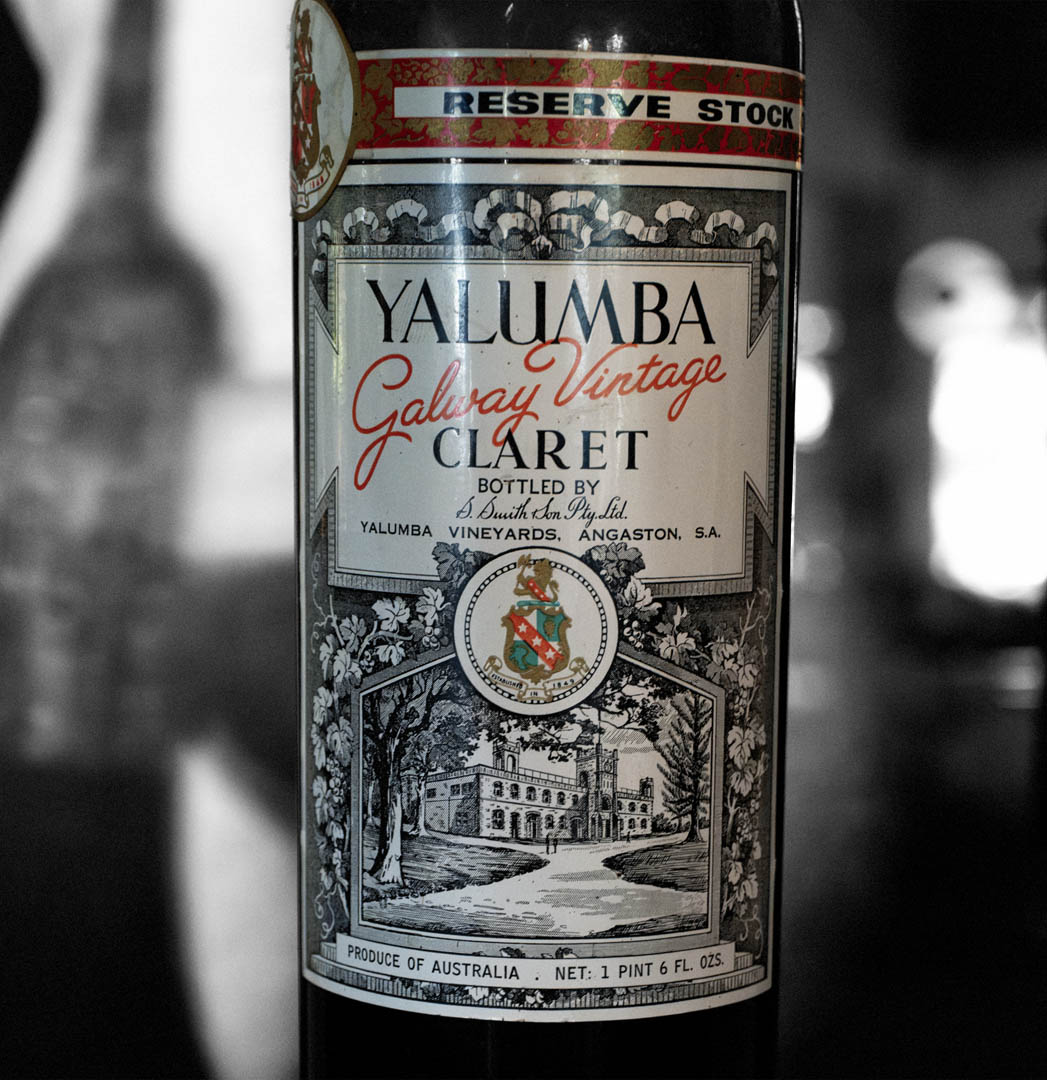
Jessica Hill-Smith’s family—Yalumba, Hill-Smith Family Estates, Negociants—is steeped in claret. It was she who poured me that ’67 Galway Claret cited above at Vintners Bar and Grill in Angaston. By chance I was there the lunchtime she and the extended Yalumba clan were celebrating her father, Robert’s birthday. Robert Hill-Smith has generously hosted some of the most important tastings ever in Australia featuring lauded wines of this land and beyond.
At the Yalumba Museum tasting at in April 1993, a month before the publication of my first wine column in The Australian Financial Review I got to taste a 1955 Coonawarra (of unknown origin), the 1945 Mount Pleasant Henry II Claret, a 1919 Reynella Claret, and a 1919 Valley Claret which at the time was one of the oldest know Barossa wines in existence. There was even a trio of ‘Margoose’: from ’82, ’66, and ’55. Winemaker Drew Tuckwell, with whom I tasted on the day, got it right when he opined, ‘I had to pinch myself to make sure it was true. And it was.’ A genuinely unforgettable experience.
In 1999 the Hill-Smith family celebrated Yalumba’s 150th anniversary with a museum tasting in London also. This I know as a lovely story about it featured in a collection of—here’s that forever erudite and eloquent man of wine again—Hugh Johnson’s shorter-format works, On Wine (Mitchell Beazley, 2016).
In the piece ‘The Discovery of Australia’ he wrote: ‘I had a glass of Yalumba FDR1A 1974 to my lips when it clicked. The date, not the glass. The year I first went to Australia, according to the notes “the worst Australian vintage in the last thirty years”…’ He continues: ‘FDR stood for Fine Dry Red, a right-on name for Cabernet-Shiraz blend of a lousy year that runs a quarter of a century and still tastes of fruit; 1A, presumably, meant A1.’
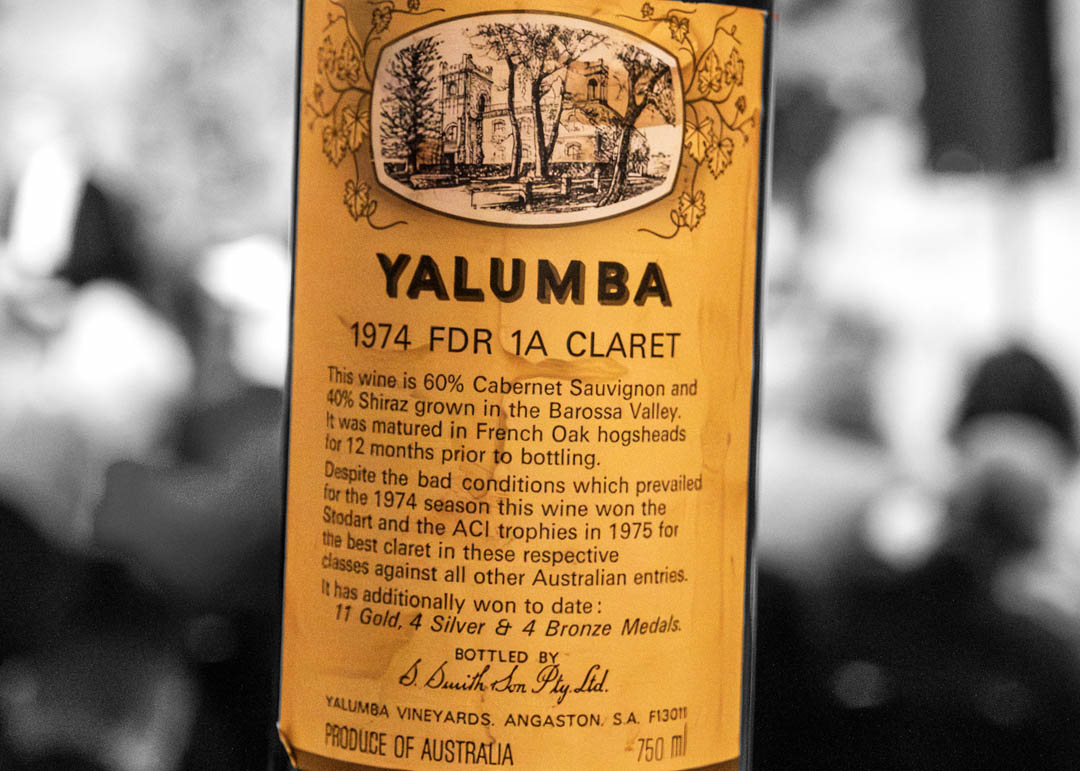
Only ever tasted this once also—specifically the 17th April 2024—and it’s quite a story . Pic: Tim White
As always, he was spot on with these observations. I can also inform you that the FDR1A 1974 has now run half a century and still tastes of fruit. Because on the occasion of Yalumba’s 175th anniversary in 2024 the family celebrated with another great museum tasting in The Octavius Cellar at the winery in Angaston. And it was included in a bracket devoted to Australian claret.
Only at the time of tasting I was entirely unaware of this. Because while tasting the wine in tandem with a small group of other invited guests, I did not get to see the detail on the label. My note on this remarkable liquid wasn’t quite as fulsome as Johnson’s all those years ago and I simply wrote: Crisp and easy, has some balsamic. But it still had fruit!
Only at the conclusion of the tasting, while invited speakers were commenting on their own highlights of the tasting, did I turn the page in the tasting booklet and ascertain the identity of the wine that I’d recently put to my lips. So I piped up—uninvited—and quoted Johnson’s words on this truly praise-worthy Aussie claret. Robert Hill-Smith would tell me later that he’d no idea that Johnson had paid this homage.
A little while after Bizot’s thought-provoking Cabernet Sauvignon Shiraz experience I got talking about the future of claret with Jessica Hill-Smith who attended on that memorable day. Is there a future for ‘claret’, I pondered? ‘I don’t think it discriminates against other blends,’ she replied. ’It’s just indicative of the style.’ Adding: ’It’s also snappy and memorable. We can’t legally label it or claim it, but this doesn’t mean we can’t talk about it in conversations and in stories.’
Indeed. Stories—real stories, meaningful ones—are as invaluable as the delicious— sometimes incredibly precious—liquids they describe. That we have now have a Frenchman from Champagne, that is Xavier Bizot, whose family is intimately connected with the great house of Bollinger, espousing the delights of this peculiarly Aussie red blend brings yet more colour and detail to the tale of Australian Claret. We need to share—commemorate—the lore of great Australian Cabernet Sauvignon Shiraz and other companion blends far more. So one final tattle to add to the tale.
There’s no date set on the International Wine Days calendar yet for Australian Cabernet Shiraz, although while DuckDuckGo-ing for this revision I did learn that there is a Feast of St. Anthony Mary Claret day. Even now, if you Google ‘International Claret Day’ the search returns International Clarinet Day. But the 25th of August—the date Bizot chose for his Aussie claret tasting—is still free. So let’s grab it and celebrate. And enjoy it with a roll at your local lawn bowls club.
Written/Revised and published by Tim White, 2022/2026.
As stated above the original version of this piece was comissioned by Xavier Bizot, co-proprietor of Terre à Terre and Daosa wines. I give thanks for his — and Lucy Croser's — support.
New Australian Clarets
Terre à Terre Crayères Vineyard Reserve Cabernet Sauvignon Shiraz Franc 2022 (Wrattonbully, SA)
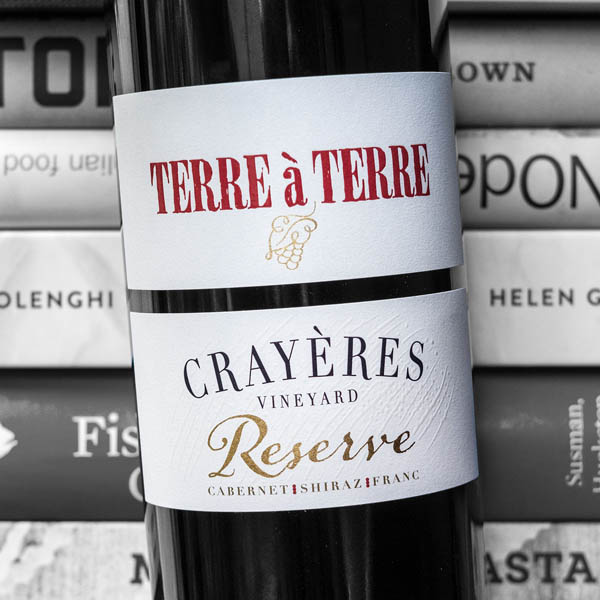
This smells super-stylish. And a bit Italianate, in a Tuscan kind-of way. Perhaps because I’ve made a note about Siena cake, a.k.a. panforte? Deep and dense smelling in the fruit department, but also sparkly. With complementary—swanky—cedary oak adding dustiness and sapid smells among the sweet. Gets shiny, rye sourdough crust as it sits in the glass, and there’s a sniff of smoked oyster shell. It’s a fancy, bitter chocolate panforte and there are dried sour cherries and peel. All just the right side of juicy as it is in the mouth. It’s deep flavoured and dry, with serious tannins, but they break perfectly among the bitter peel and soused cherry fruit flavours. The oyster shell salinity of the nose is there too, and the sapid finish is tight and lingering, And with bitter chocolate and dried mixed-peel fruit mouth-aromas too. Has serious style. 95(96)/100 (e) - 10/10 (h) - 😋😋😋 - $90 cellar direct. This is a cracker, and the first release of the Terre à Terre Reserve that can be cracked as it’s now sealed under screwcap. This a delight to drink now—just give it some time and air—but will be getting really delicious in five to ten years I reckon.
Yalumba The Signature Cabernet Sauvignon Shiraz 2023 (Barossa, SA)
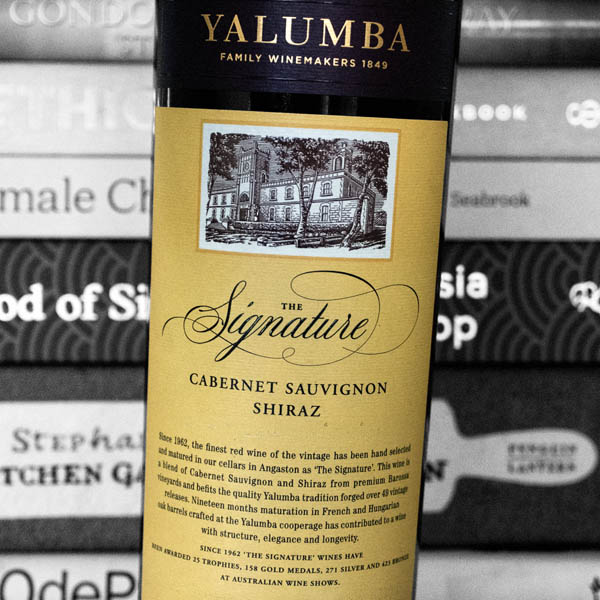
Deep dark plummy. Gentle pepper drifts in and out too with a little air. Carbon paper, blueberry leaf, chamomile. Smells dark and dry. But then punnets of currants loom up as it opens up, getting both glistening and sparkly. There’s Cabernet Sauvignon character in here which reminds me of the Houghton clone*. An edginess. Fabulous plump fruit and positive austerity in the mouth; carbon paper mouthwatering, then dry and tight. The cabernet sauvignon is flavour loaded and loaded with character. Rye crust. And so it tastes. Has a really positive austerity. Cassis too. There’s sharpness and dryness. This is making me thirsty just writing my review. Fruitcake and sourdough crust. 😋😋😋. 95(97)/100 (e) - 9/10 (h) - $74 cellar direct. This will easily evolve for a decade plus, assuming the natural cork closure does its job.
wines by KT Kerri Thompson Howarth Vineyard Shiraz Cabernet Sauvignon 2022 (Clare Valley, SA)
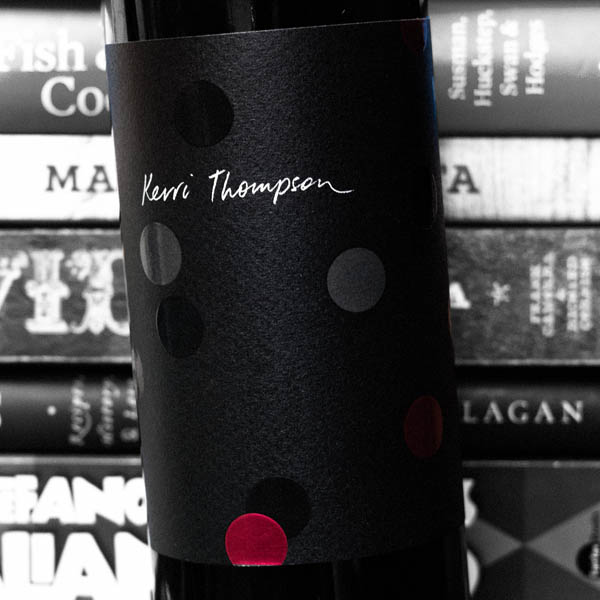
This is one serious smelling red. Irresistible, in fact: it pulls you in. Smells dense and succulent, but there’s also sparkle. Blackberry violet, fig glaze, flake tobacco. It shifts fruit-wise to more saturated, satsuma plumminess with air. Transitory—complimentary—Aussie sous bois too. It is serious tasting as well: loaded with cane berry juice and pippiness; and mulberries soused in terra cotta. There’s carbon paper shimmer among the building—evolving—crusty tannins which cradle the super-lucid fruit. Eccles cake crystallised fruit and pastry crust. And then mouth-aromas lit with oyster shell, gentle baking spices, and fancy—although discreet—oak toast rye crust. And then yet more cane berry sharp-succulence. Even more expressive on day two. Shape, flavour, structure: what a wine! Has latent complexity deeply embedded. 96(98)/100 (e) - 10/10 (h) -😋😋😋- $125 cellar direct. Super-classy Australian claret of the medium to full-bodied kind. It is a delight to enjoy now, but will be so also in ten years, and twenty—and more.
You’ll find some more detail about this wine, and more reviews of wines by KT here.
Tomfoolery Son of a Gun Cabernet Sauvignon Shiraz 2023 (Barossa, SA)
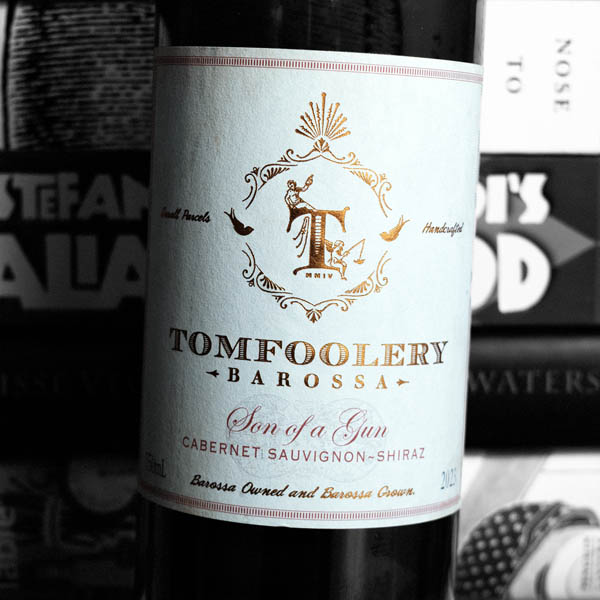
Plum pudding deep, with forest berry juice and leaf too. Violet and peel: smells like real Aussie claret. Shimmering juice and carbon paper lustre. Smells like fun. Has fruitcake richness on the palate, but also juiciness at its core, which are bound with ease in serious, but yielding tannins. Only one things lets it down a bit and that’s a sort of marshmallow oak character. But it kind of suits it. 92/100 (e) - 8/10 (h) - 😋(😋) - $36 cellar direct. This is tasty lunchtime claret and I know where you can enjoy it at lunchtime too: and that’s the Gilbert Street Hotel.