The Why of Australian Viognier
A generation ago on the 15th and 16th of August 2002, Australia’s first Viognier—say VEE-YON-YAY—symposium took place at the Hill-Smith family’s Yalumba winery in Angaston. It’s fair to say that the cultivar hasn’t quite gripped the imagination—or stimulated palates—as much as many of the enthusiastic wine trade, wine makers, marketers and writers attending had hoped, but there are still many delicious examples grown around the country today nonetheless. And now both Generations Y (Millennials) and Z are old enough to partake of a glass or two—if they dare.
The selection of Viognier offerings out there is not as as vast as those of Sauvignon Blanc, Riesling, Chardonnay, or Pinot Gris/Grigio—even Fiano these days—but the producers fashioning wine from this capricious cultivar take the growing and vinifying of it most seriously, even at modest price-points (see my 23’ Yalumba Y review here).
And the wines Viognier creates are certainly less predictable—read boring—than so much blanc (especially), gris (there’s a lot of seriously grey grigio out there) and even—I’m a heretic to utter it—way too much lime-acid-cordial-simple rizza.
Wine Australia’s bland 'Australian Wine’ branded website states: ‘Australian Viognier is a wine like no other – from its heady perfume to its exotic fruit and floral flavours. A variety on the rise, the best Viognier wines walk a thrilling line between elegance and power.’ While I’d contest the observation that Viognier is a ‘variety on the rise’, I can’t fault the enthusiasm of the rest of this statement.

That said, I do have a few issues with this generally bland information portal—federal government and industry-funded—which adds little to the appreciation of the diverse, exciting wines grown across this vast, fascinating land. Not at first landing anyhow, although there are some detailed wine guide pdfs for download which provide meaningful insights. And there are some excellent winemaker / winegrower profiles to be found on the website also.
But it’s the lack of engagement when first accessing the site which irks me. Australia is making exciting wines in beautiful places, although you wouldn’t immediately know it. We need to be on the front foot about this. And one wonders how much thought really gone into some of the content.
On a 'How to pair wine & Thai food' page, for example, where I would have placed Viognier as a potential candidate incidentally, the listing spells Gewürztraminer incorrectly (with two Ts), suggests 'Provence-style' Rosé with Thai Beef Salad, and Sparkling/Champagne with Spring Rolls & Moneybags!
Wine Australia is obviously aware that we cannot legally use Champagne on an Australian wine label, so are they suggesting we drink the real thing? And why would we promote Provence which is another wine region of France? ‘We have a wine for that’ is the latest Wine Australia marketing tagline, so too do the French clearly.
Seriously, when you look at what our closest winegrowing neighbours geographically in New Zealand provide, and also the compelling online presence that Wines of Austria, our nearest wine neighbours alphabetically have created, the Wine Australia welcome to Australian wine offering is—to paraphrase the organisation's 2019 $50 million Export and Regional Wine Support Package 'Far From Ordinary’campaign tagline—‘Less Than Inspiring'. But back to Viognier—Australian Viognier’s—deliciousness.
Apricots, Cream and Delight
According to the internationally authoritative and much lauded ampelographical volume, Wine Grapes (Jancis Robinson, Julia Harding, and José Vouillamoz; Penguin and Harper Collins (ecco), 2012), ‘…Viognier in Australia…develops flavours of apricot, peaches, white flowers, occasionally ginger, and luscious texture in these wines.’
How’s that for an emphatic shout out to Viognier’s distinctive charms in our neck of vine woods? The Yalumba Viognier Symposium (referred to above in my intro) gets a nod too, and also Yalumba winemaker and Head of Sustainability, Louisa Rose, who’s passionately advocated Viognier’s cause in Australia throughout her vinicultural life.
While I’m not a fan of the generic ‘white flowers’ descriptor used above, which is deployed for many wine styles by innumerable wine communicators and influencers—even those with some acuity—Viognier can definitely be up there in the floral, terpenoid compound department. Frequently I’ve noted jasmine, chamomile, rose—Turkish Delight—among the concentrated ‘apricottiness’ found in the most intense examples (such as the Charlish and Co. below).
There’s a piece about these contributing aroma compounds, identified as geraniol, linalool and nerol, on the Wine Australia website. The piece, which is a summary of lead researcher Leigh Francis’s paper for the Australian Wine Research Institute (AWRI), also makes mention of the esters responsible for the creation of ‘peach-like’ aromas too, as well as the more general ‘stone-fruit’ like characters brought about by these monoterpenes frolicking in cahoots with lactones.
There’s a link to download the complete paper should you wish to delve deeper into the detail.
In the paper, ‘Sensory-directed characterisation of distinctive aromas of Sauternes and Viognier wines through semi-preparative liquid chromatography and gas chromatography approaches’, from A journal of Chromatography we find the observation, ’In Viognier wine, monoterpenes linalool, α-terpineol and geraniol as well as benzaldehyde were found to be associated with the ‘apricot’ character.’ Benzaldehyde is an interesting one. To me it’s the cracked stone character, rather than a flesh.
Interestingly, there’s no mention of zingiberene among the nominated terpenes out there in any paper I can readily access, so I’m assuming this isn’t on the Viognier GCMS assessment run sheets. But, as the authors of Wine Grapes indicate above, ginger is perceived as a characteristic—and desirable—contributing aromatic in Viognier and is not uncommon in more complex expressions of the variety (check out my review of the 2023 Soumah Equilibrio).
I’ve even encountered a gingery character in a some vintages of Clonakilla’s much lauded and adored Shiraz Viognier over the years. Even once or twice in the O’Riada Shiraz which had me puzzled as I understood it to be straight Shiraz (it’s quite pronounced in the ’22, but I made no note of it in the ’23). But apparently it is not always, and may get a little deselected Shiraz Viognier added to it also. So Viognier’s zingiberene can be that pervasive.
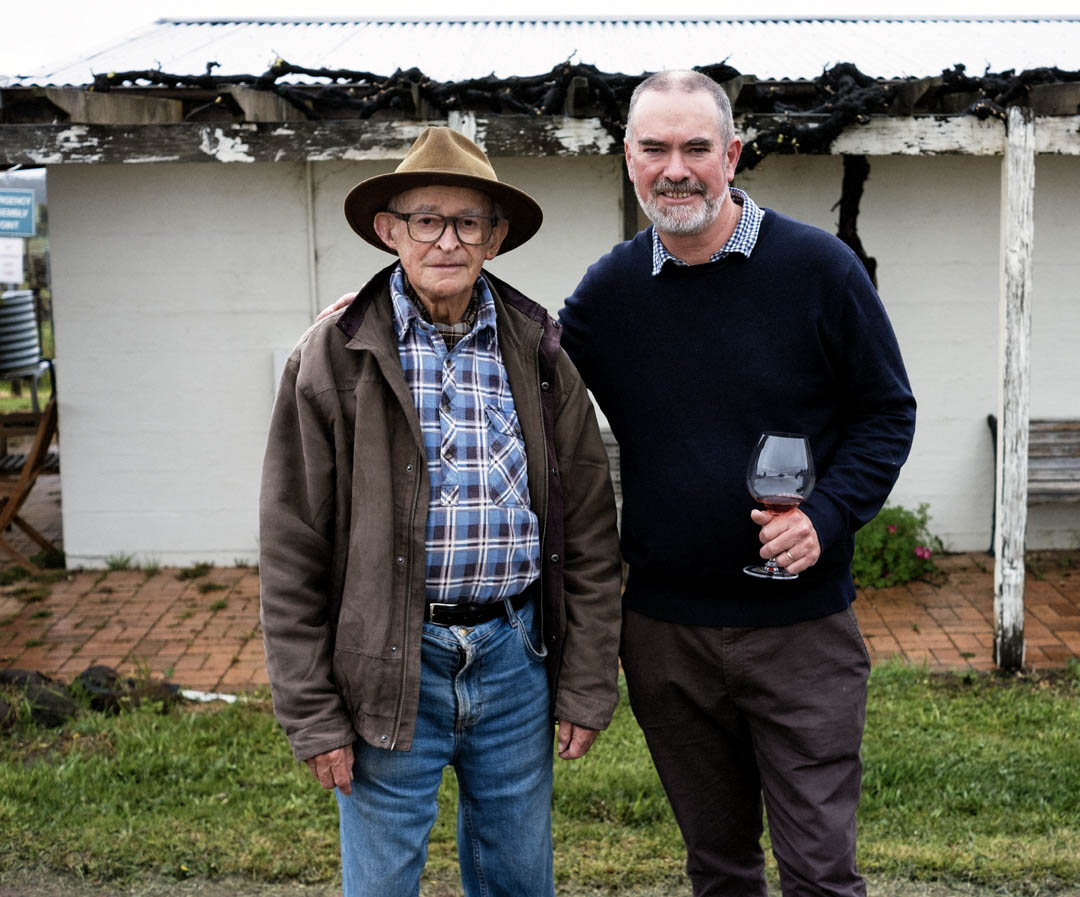
Tim Kirk with a Shiraz Viognier in hand, alongside his father, John, at Clonakilla’s 50th celebrations in October 2022. Pic: Tim White
Monoterpene deep diving
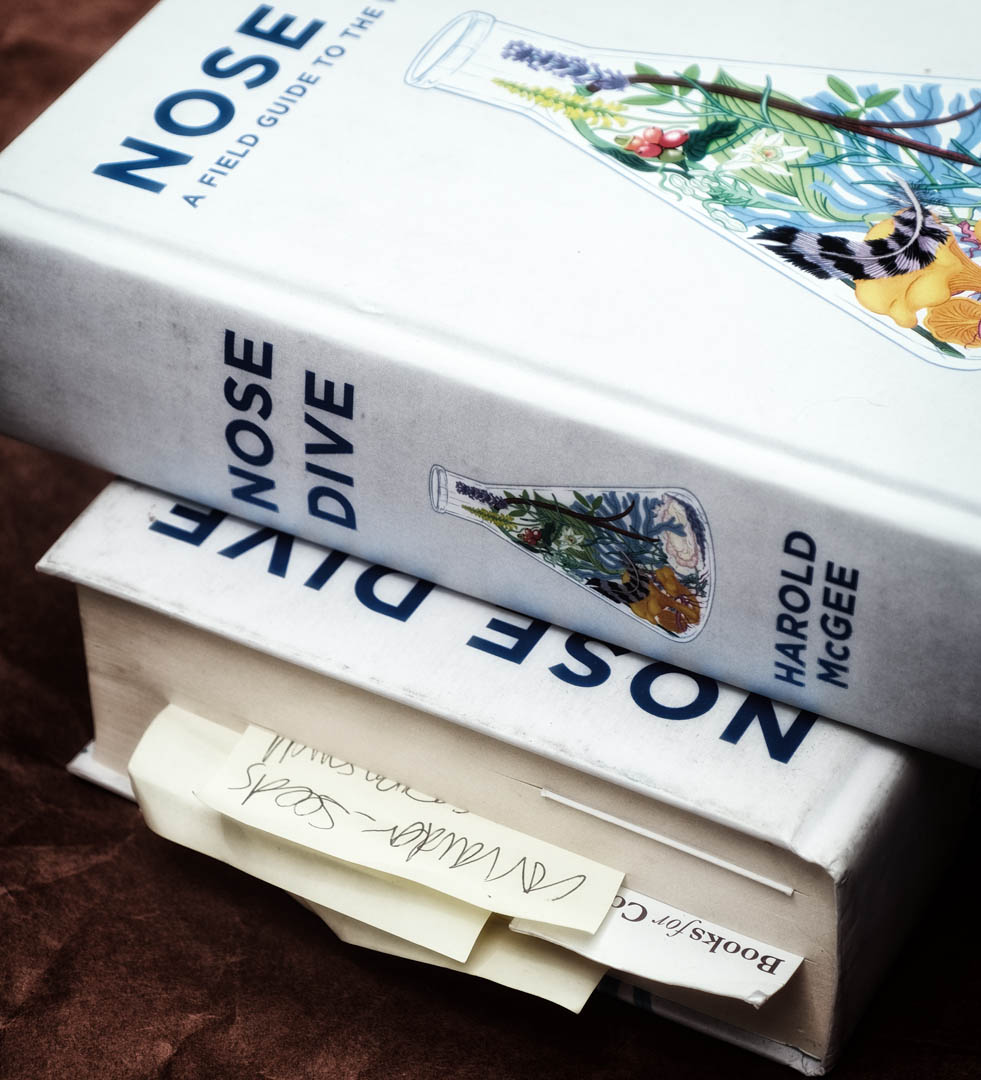
In Nose Dive: A Field Guide to the World’s Smells (Penguin Press/John Murray, 2020) Harold McGee writes that ‘…ginger emits a distinctive, fresh smelling terpenoid dubbed zingiberene, along with fresh-woody pinene and eucalyptol, as well as lemony neral (sic) and geranial (sic), floral linalool, and a woody note from terpinolene.’ Little sensory wonder that it may find good company among all the more fleshy apricottiness.
McGee notes g-deca- & g-dodeca-lactones and linalool among the apricots’s principal flavour molecules and in a table in the ‘rose-family’ stone fruit section, lists these ‘component smells’: floral, peach, creamy, geranium leaf, and cucumber. In many a Viognier tasting note—long before encountering McGee’s entry on apricots—I’ve noted cold green tea, jasmine, snow pea—and cucumber rind—in addition to the more primary impact aromas.
Almost all the descriptors in the paragraph above could be found into my collective reviews of Yalumba ’s entry-level Y Series Viognier over the vintages. This frequently delightful wine is made with minimal intervention, is primarily tank fermented, and 100% wild yeast apparently.
Pic: Tim White
Sometimes it’s hard to get your head—in the orthonasal and retronasal senses of smell—around the fact that all these miraculous compounds we perceive are just—JUST—from a liquid which is created solely from bunches of carefully tended grapes, crushed and fermented in tanks of steel—and/0r—casks of wood. How could you not be entranced by this magic of nature. And then not want to be consumed in it?
If you were a craft brewer looking to create—say—an ‘apricots and cream sour’, you’d need build this complexity with multiple hop types—almost certainly imported, not grown in Australia—adding other ancillary local fruit and cereal ingredients. This I mention as just weeks ago I overheard an excited younger person assessing the decals at my local hostelry, The Gilbert Street Hotel, and then asking the bartender as to whether one of the beers tapped, a Ministry of Beer Mango and Cream Sour tasted ‘delicious’?
Deliciousness is, of course, under the nose and in the mouth of the beholder. She was offered a taste of same and another fine ale—a Mountain Culture x BentSpoke Full Suspension IPA, which I was pondering and much enjoying from the fancy in front of me. But the Mangoes and Cream won over. The Full Suspension being too hoppy bitter to her taste that day (as I eavesdropped the chat).
All things nice
Why mention this? Well, in the same way that some wine producers now have a ‘Buttery Chardonnay’ label in their portfolio as an emphatic and familiar statement of character about the style of wine to be found in the bottle. Perhaps, we might eschew traditional—formal, procedural—varietal labelling to provide immediate and familiar indications as to a wines potential deliciousness.
‘Buttery Chardonnay’ is becoming most popular in some parts by all accounts. De Bortoli’s is going so well at that have also recently debuted a Pepper and Spice Shiraz to partner it. What gastronomic aromatic emotions and excitement might be stimulated by—say—a statement of Apricot, Ginger and Cream on a label? Upfront I mean: that is above or below, alongside, a varietal indication on the front label.
This could be more effective in evoking—prompting, recalling in a Proustian manner—familiar, adored, absorbed smell and taste memories. All this without resorting to the winespeakery often found on back labels.
However, I’ve encountered numerous wine purists—including winemakers—who laugh, are aghast—mock—such marketing effrontery as the ‘Buttery Chardonnay’ thing. To me, if it makes people curious enough to stick something new in their mouths and get pleasure from the experience, it can only be a good thing.
Pic: Tim White
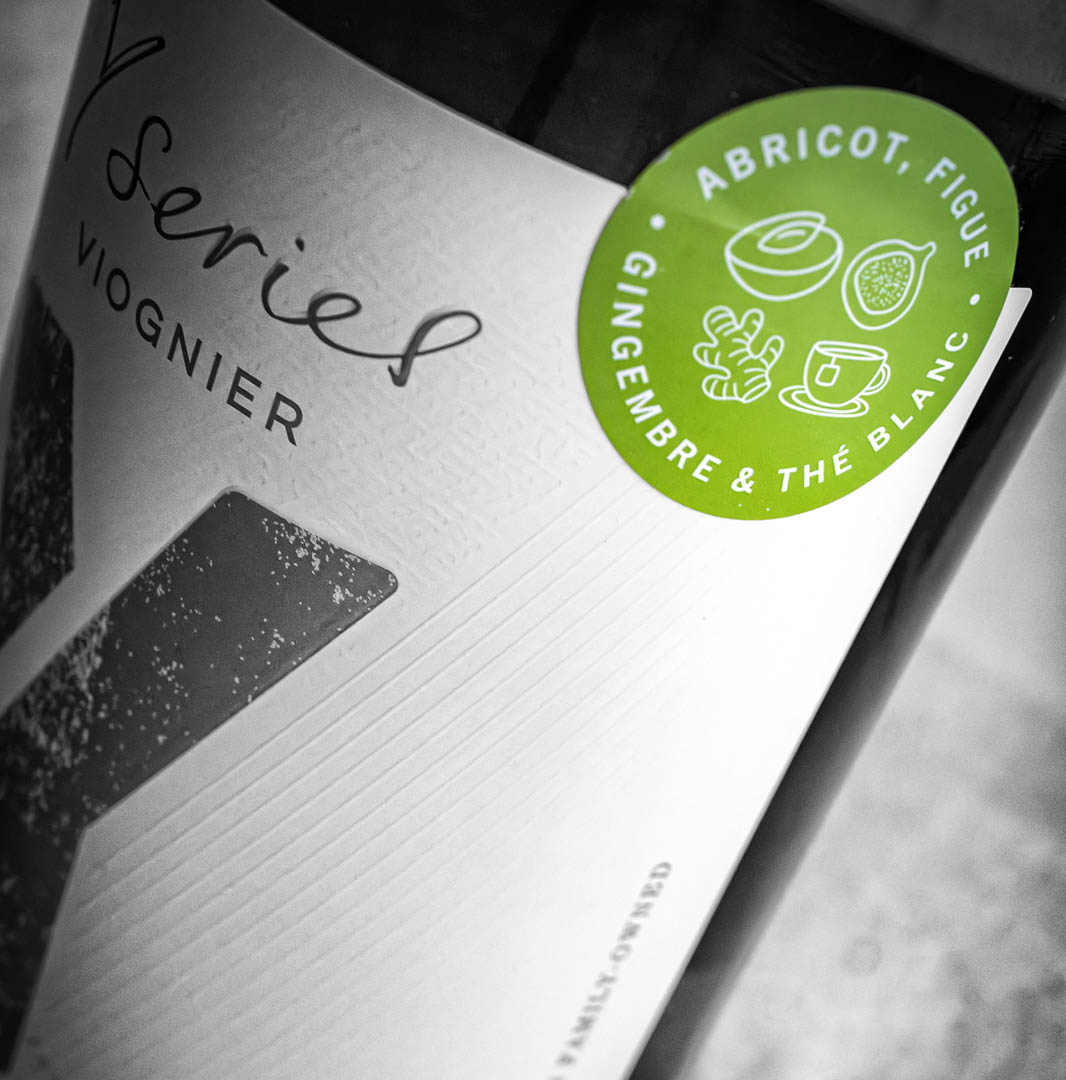
And then—randomly—seriously randomly—just two weeks ago (June 2026) I found this sticker on one—just one—of the bottles of my ‘house white’ in the fridge at Hurley Cellars Parkville. That wine being the Yalumba Y 2023 cited above. So what’s going on here? And why the descriptors in French? Maybe it was part of a cancelled export order, but heading to where? New Caledonia? Mauritius? Surely not France.
I’m making enquiries to the Hill-Smith family wine folk at Yalumba. But the Viognier universe is obviously speaking to me. En Français.
Gert Lusciousness
What’s responsible for, or contributes to, the ‘luscious’ observation from ‘Wine Grapes’ cited above—an excellent descriptor methinks. If any wine could be described as 'gert lush’ it’s Viognier. Also a fine Gewürztraminer from Alsace (gert lush examples of Gewürz in Australian are rare).
Yet, I’ve not been able to source any papers to date that provides any detailed indication as to how this slinky, silky viscosity develops in the most complete examples of the cultivar? In my native tongue at least. Perhaps someone has access to words of authority in French?
So, conjecturing: are there compounds in Viognier skins or juice which, once fermentation is underway, creates this lusciousness alongside the slight, phenolics-derived bitterness that accompanies it in the best examples? That slightly bitter grip which keeps the slipperiness—lusciousness—in check.
Alcohol obviously has a role in this, but not the only one. Because I’ve encountered plenty of ‘greasy’ textured Viognier which are not super-high in the alcohol department, or at least no higher than other examples with excellent balance.
Elevated glycerol levels are cited out there if one Duck Duck Go’s with AI assist. But we know this to be of doubtful validity and there’s a succinct treatment explaining glycerol’s (extremely minor) textural role in vino to be found in The Oxford Companion to Wine (Jancis Robinson and Julia Harding, with Tara Q. Thoms (eds.), Oxford University Press, 5th Edition 2023).
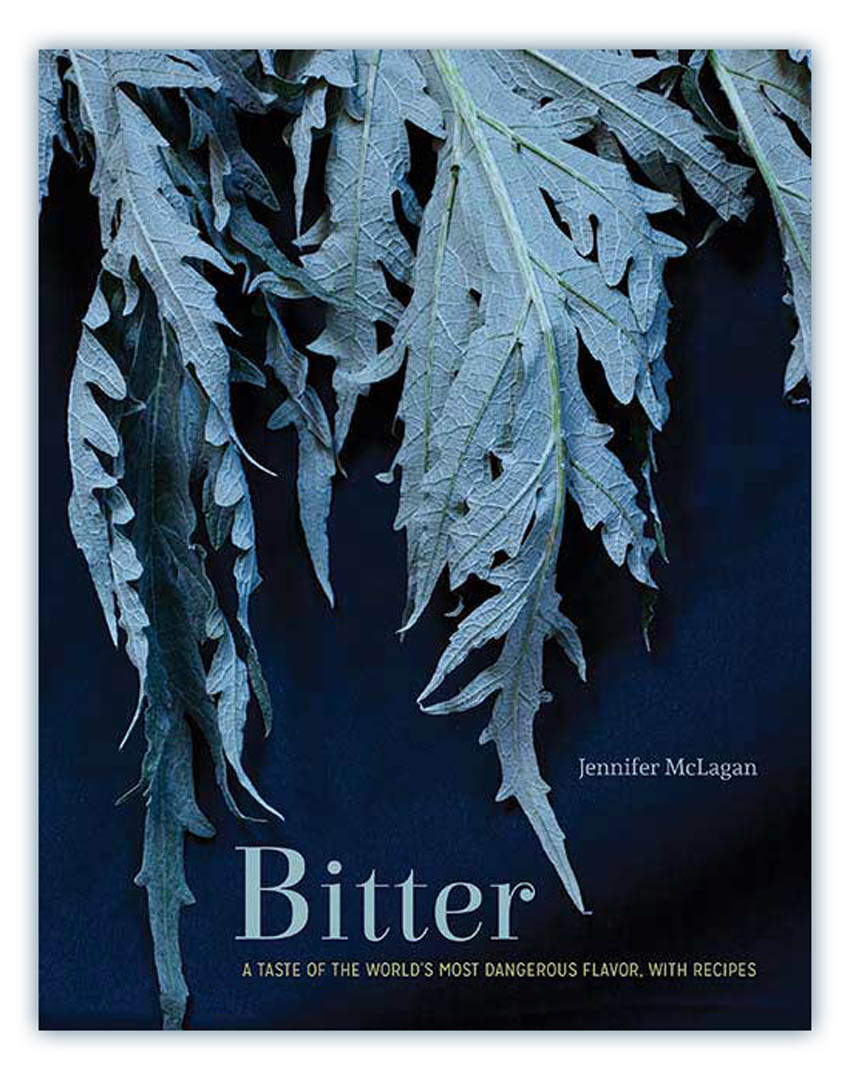
In her cookbook, Bitter (Jacqui Small/10 Speed Press, 2014) Jennifer McLagan writes, ‘I find apricots become more tannic with cooking, which gives them a slight bitterness.’ Having poached—in sugar syrup—a good few kilos of apricots myself over the years, I concur. And as they begin to kick off the aromatics more resemble what you might find in a really delicious Viognier.
McLagan’s observation does make me ponder if the Viognier cooking process—fermentation that is—somehow emulates it. That there is a relationship between these flavour compounds and Viognier’s latent slippery bitterness. Phenolics, low acidity, alcohol in just the right balance.
Perhaps over-simplification. But vinification decisions pertaining to juice turbidity, time on skins in the press—which relates to the extractions of phenolics of course—and then duration, warmth, and nature of the ferment, as well as the size and type of the pot you’re cooking is all similar and familiar. If a bit more complex than poaching apricots.
Or we could just put this (sometimes) fabulous textural transformation down to what me and my friend Stephen Pannell refer to as ‘weird wine shit’. A term he first deployed when we were putting a shiraz blend together—the multi-award winning ’97 Eileen Hardy blend of various McLaren Vale and Padthaway components—in 1998.
Before moving on—and concluding—I’d add that to define Jennifer McLagen’s work, Bitter as a ‘cookbook’, is a little demeaning. Because it is so much more, containing essays with themes such as ‘A History of Basic Tastes’, ‘Memorable Taste’, ‘The World’s Most Expensive Vegetable’, ‘Drinking Bitter’, ‘Hearing Taste’, and ‘Smelling Taste’—the latter containing the question, ‘Can a food smell bitter?’ YES!
These musings are sandwiched among numerous highly stimulating recipes and other pertinent observations. If you’re puzzling about what to eat with Viognier then McLagan’s Fernet-Branca Chicken Livers makes a perfect accompaniment for such as the ’23 Yalumba Y. A curious omission from McLagan’s work is any mention of quinces which, to my palate at least, is both sweet and bitter at the end of the long slow poaching process (assuming that the skins are retained—and they should be!). A spicy quince and pork tagine works with Viognier too I reckon.
Bitter should be in every food and wine lover’s reference library, and while long out of print there are editions aplenty to be found at AbeBooks (where I’ve sourced a few copies as gifts). My original copy I acquired from Melbourne’s fabulous thought for food emporium, Books for Cooks. So check there too. It is a work which is both thought provoking, salivation creating, and appetite stimulating.
Faith, Hope and Clarity
Tim Kirk and I spoke recently of Viognier’s remarkable aromatics and lusciousness. He was also unaware of any credentialed work on the matter of its beguiling textural properties. We both exchanged observations about the miracle that is contained within grape berries and the wondrous things that are conjured from them.
I conclude with this as it was with he and Michael Andrewartha, proprieitor of Adelaide’s East End Cellars, that I travelled to the Barossa on that first day of Yalumba’s Viognier Symposium. It was a divine winter’s morning and we stopped at the sculpture park atop Mengler’s Hill so that Tim might take in the lie of the land below.
It was his first visit to the Barossa and he surveyed the geological miracle about him, genuinely moved. Now Kirk is an individual of considerable faith, and he knew darned well that I am a most secular individual; but he turned towards me—beatifcally beaming— and observed, ‘You see Tim, there is a God.’
Despite my agnosticism I do pay absolute homage to the wonder and beauty of Mother Nature’s gifts. And this grape—Viognier—and the places that have grown it sometimes leave me spellbound.
I was a bit awestruck too when a representative of the good people at Yalumba got back to me on the mysterious matter of the sticker which appeared on that one—one—bottle of Yalumba’s viognier among a dozen or so others in the fridge at Hurley Cellars.
It transpires that it was not a cancelled order to a French language speaking country, but a fulfilled one to the territory of Quebec. The Canadian bottling run took place just before the domestic bottling, apparently, and so it appears a small number of bottles in the local market had the export sticker applied.
What are the chances of me, while writing these words—half-way through pulling this story together—happening upon this one bottle in a fridge that I know to be replenished often? While not exactly the face of God appearing on a tortilla in Mexico (to appropriate some dialogue from a vintage episode of the Simpsons), it’s a minor miracle. The Viognier universe has evidently spoken to me.
So, leaning into Yalumba’s own Y series ‘Find your Y’ tagline, I can now answer the eternal question: Is there a Why in Viognier? An emphatic, Yes. And I earnestly hope that it reaches out to other lovers of the luscious of wine within them.
Written and published by Tim White, June/July 2026
Apricot & Ginger
Yalumba Y Series Viognier 2023 (South Australia, SA)

Subtle dried apricot, among pear skin and cooled, gently flambéed flesh (also of the pear kind). Smells plump and inviting rather than overwhelming, as some exhuberant viognier is wont to be. There’s a touch of (attractive) low-level match-strike sulphide pong too, which only adds to the aromatic interest. Peach kernel. Dried peel. How it tastes too: white stone-fruit kernel intensely charged, although restrained, with just the right a lick of slipperiness, which is then tweaked by dried mandarine peel. It’s not super-long, but nor does it peter out, while the texture is absolutely bang-on. Has some style and flavour this. 90/100 - 8/10 - 😋😋 - $15 cellar direct. You may find this wine out there in retail land for as little as $12.99 a bottle (or $11.69 in a six-bottle buy). This I know because I’ve bought quite a few bottles from Hurley Cellars in Parkville (SA) over the past few months. What a bargain. It makes a great g’spritzer too when the temperature is on the high-side.
This wine was assessed in one of my little blind line-ups, so I was not aware of its humble origins at the time of tasting. It has serious lineage though, given Yalumba’s fine work growing this curious cultivar over the decades, as may be experienced in both the serious statement white, Virgilius, and the more modest Eden Valley bottling (although I’ve encountered neither for some time). This Y—the best release since the 2019—is so seriously good I can’t help thinking that it may have benefitted from a drop or two trickling into it from Yalumba’s more exalted examples above it. I’ll endeavour to find out. The Hill-Smith family do grow Viognier on their Oxford Landing property in some quantity also.
And I have been now so advised. The exact mix comprises 68% fruit of the river, of which more than a third is from the Hill-Smith family’s Oxford Landing vineyard; 25% is from the Barossa Valley, 4% Wrattonbully, with the balance from Eden Valley and the Adelaide Hills. So lots of quality grape gear in here. (Updated: 26-07-21).
Can’t resist pondering that if this was a bit murky-looking and presented in a natty package, it would be triple the price. Although it can’t leverage any true-natty credentials it is ‘wild-yeast’ fermented. So there’s some cred in this regard for those that care about such things. So close your eyes and dream that you’re drinking an exotic, small-batch field-blend—and then pinch yourself, because you’re paying just a third of the price.
Soumah Single Vineyard Equilibrio Viognier 2023 (Yarra Valley, Vic)

Opens early—chilled—with considerable complexity this. Semi-dehydrated, bitter orange peel; warm, yellow peachy flesh attached to the kernel. Some cashew things and white sweetcorn silk glow. But also just the right amount of cucumber peel, bitter skin cut. With more air and warmth there’s a grachai rhizome character (what what the genius chef-writer, David Thompson, describes as wild ginger). Some pineapple cube too. Has yellow—peachy, apricot fuzzy—fruit feeling flavours on the palate too, with phenolic chew, and just the right amount of textural slinkiness. Fab width here. An integrated mouth-aroma dab of excellent sourdough crusty oak too. There’s fabulous succulence for the first two thirds, but—maybe I am being hyper-critical?—it pulls up a bit in the last. Great width though, and so, so, super-stylish. 94(95)/100 (e) - 10/10 (h) - 😋😋😋 - $92 cellar direct. Actually let’s make this a 95/100 straight up, as I’d certainly push it forward at a wine show.
I make the final observation about pushing the wine forward, as it is most important at an Australian wine show to confer gold medal-equivalent points to a wine that the judge feels is: a), special, and/or b), one that might somehow be overlooked by others. (All wine show judges will—have done—missed a star wine one time or another). Were I to be have been one of the judges at the Yarra Valley Wine Show, for example, which happened to be taking place the same week as I was assessing my line-up of exotic white wines in which the above was included, I would have ‘golded’ it to make sure it was brought to everyone’s attention. And accordingly I would have presented the arguments of my tasting note above about the wine's merits and why it should be so awarded. Since I’ve never been asked to judge this show this is, of course, most conjectural. It will be intresting to see what score and medal was awarded to this delicious wine, if indeed it was even entered. Now I am even more sure about this wine’s quality having watched it evolve over a few days, which understandably cannot be done at a wine show. So for the record I’m now giving it a definite 95/100. And I would have voted for it at trophy time.
The crazy-detailed Soumah labels which itemise, among other things, harvest date, oak format, pH, TA, yeast (wild apparently), also specifies the Viognier clone as HTK, 1968. My database has these listed as two separate clones, the former being a heat-treated version of the virussed latter, so I’ll investigate further. And in now doing so I’m told both clones are planted: with the former at a closely-planted 9000 vines per hectare, and the 1968 on a more conventional Australian vineyard spacing. What’s omitted on the label though is the vine age, but as the first release of Viognier from the estate was in 2010 we can assume they went in the early to mid-2000s before more recently imported clones of Viognier were released through the Yalumba nursery.
There really is a treasure trove of Viognier planting material available from Yalumba, with material sourced from Condrieu, Côte-Rôtie and the Ardèche in France, as well as California. The nursery’s website lists the Californian sources as Jade Mountain and Tablas Creek (ex-Beaucastel apparently), and although no sources for the French material is indicated I have notes that say the source material was obtained from Guigal and Yves Cuilleron. Both 1968 clones are still available and Yalumba’s team speak most highly of the virussed example especially.
Charlish & Co. Viognier 2024 (McLaren Vale, SA)

Super pure—although subdued—compressed apricot, Turkish Delight rose, then getting edgier as nuttier apricot kernel builds. So somehwat terpene perfumed, but not too heady. There’s a touch of Poire William too, with transitory wafts of makrut lime. This is so much fun. (Which is what the majority of Australian wine used to be about until wine judges, sommeliers, distributors, and influencers, decided to dole out advice to the otherwise). Has juice and peel, and super-intense, compressed apricot pear saltiness. The palate is a total blast too: bracing, packed with lingering, compressed, liquid ozone sea spray melty, white nectarine fruit, and a tweak of rocket bitterness. Reckon this will develop another facet or two with a year of so in bottle. 93(94)/100 (e) - 9/10 (h) - 😋😋😋 - $30 cellar direct. I’m maybe being a bit miserly with my (e) score, as I’d almost certainly dish out a gold—95 plus—at an Australian wine show. Like the above, this is an absolute bargain considering all the depth and intensity this wine contains. Hey, on a hot day you might even chuck in a couple of ice cubes and still be rewarded with thrilling intensity, as well as a tweak more chill.
Now this does have ‘natural wine’ credentials, although it evidentally also has a judicious amount—read minimal—of sulphur added. This advice, provide, if you’re only into full—feral-faeces—natty. According to the Charlish and Co. website it gets two days skin contact, wild-yeast fermentation and then maturation for nine months in a second use French oak puncheon. It is also, ‘…hand bottled onsite, unfined and unfiltered by us.’ The ‘us’ here being Rebecca Stubbs—whose wine label this is—and Duane Coates M.W. The grapes are sourced from a bio-dynamically farmed vineyard in Blewitt Springs. There's plenty of so-called natural wines out there which are sourced from conventionally farmed vineyards. No judgement here, just an observation.
You can read all about Coates by clicking this link. Stubbs, meanwhile, is a chef by bakground and one who’s held in high regard. You can read all about her gastronomic journey here. So when she makes a food pairing suggestion for her yummy viognier of ‘…forest mushrooms, garden herbs and butter tossed through linguini, or a classic roasted chicken with crunchy roasted potatoes, garlic and baby carrots…’ you’d be smart to take her advice. For my part I reckon it sits in the glass alongside some Kapitan—a.k.a.Nonya—chicken most agreeably also.
Mitchelton Airstrip Roussanne Viognier Marsanne 2024 (Central Victoria, Vic)
Has a lustrous, glacé straw glow—if you can conjure up such a thing—and then builds lush, deep apricot. The former derived from roussanne methinks, the latter emphatically viognier. Glacé corella pear too and smells more intensely stone fruited as it sits, but not overwhelmingly so. There’s chamomile and transitory just-mown grass adding cut. Pure, chilled panna cotta wobbliness on an oaty biscuit base. This promises to be a fun ride. Super-pure viognier expression, in a gently dehydrated—poached and gently caramelised— apricot way, and then super-slinky textured across the tongue, yet also vital and brisk, with mouth-aroma wafts 0f patined, sapid oak crustiness. In short: this tastes bloody gorgeous—what a palate! Will grow too I reckon, in the short term at least. 95/100 (e) - 10/10 (h) - 😋😋😋 - $29 cellar direct. This is one you must drink and share. Old school in the best kind of way. Like the Charlish above this is a wine of serious quality which represents incredible value for money.
When consultant winemaker, Doug Neal—of Gaffy and Neal, Altera Terra, and the Oceania representative of Nuits-St-Georges cooperage Sirugue (with Rick Kinzbrunner)—told me that Mitchelton’s cult white wine, Airstrip was getting ready for a relaunch I got rather excited. Revisiting my notes and reviews from way back when it was a wine I’d written of—and reviewed—most positively and fondly.
Indeed, I’ve affectionate memories about Mitchelton, in general. I once—fleetingly— treasured an edition of Tim Jone’s haunting, ‘In Woo’s Wood’, which adorns Mitchelton’s Print Series Shiraz label. But it was acquired for someone special as a present and is now long gone. But not the memory of it, nor of its recipient.
Nor has the enlightening experience of tasting my first Barolo Chinato at the winery faded either, poured for me by one Randall Grahm, the creator of Californian cult ‘Rhone Ranger’ wine estate, Bonny Doon. This ahead of dinner at Mitchelton following the tasting sessions of the 2002 Nagambie Lakes Rhone Varietals Seminar, which had taken place beside the billabongs at historic (nee. Chateau) Tahbilk Estate nearby…READ MORE
Revision 26-07-30: I’ve expanded this ‘feuilleton' to a more extended piece which you’ll find on this page.

Giaconda Estate Vineyard Roussanne 2023 (Beechworth, Vic)
Has classic Roussanne glowing corn silk. Crystalised mixed peel, gentle match strike and creamy, complimentary lees. Just-picked white sweetcorn chawanmushi panna cotta and something Turkish Delight-like too. More preserved lemon with air and a transitory sniff of curry leaf. Complex, crusty oak swagger too. Smells sumptuous and this is how it tastes too; has that cracked-catalana glaze and chewanmushi textural property. Not super-complex, nor super-long; but it has width and is so mouth-filling. There are mouth-aroma wafts of Turkish Delight, struck-match pistachio. And then more of that poached, stone fruit and sweetcorn, among salamandered extract. Slippery, sumptuous—and sexy with a double ’s’. 97/100 (e) - 10/10 (h) - 😋😋😋 - $85 cellar direct.
In the midst of the COVID lockdown in 2020. Interesting that I’d observe Provenance, Beechworth, althugh I new there was a wine from Beechworth in the line-up.
