SHIraz-SYRAH of CURRENT Note
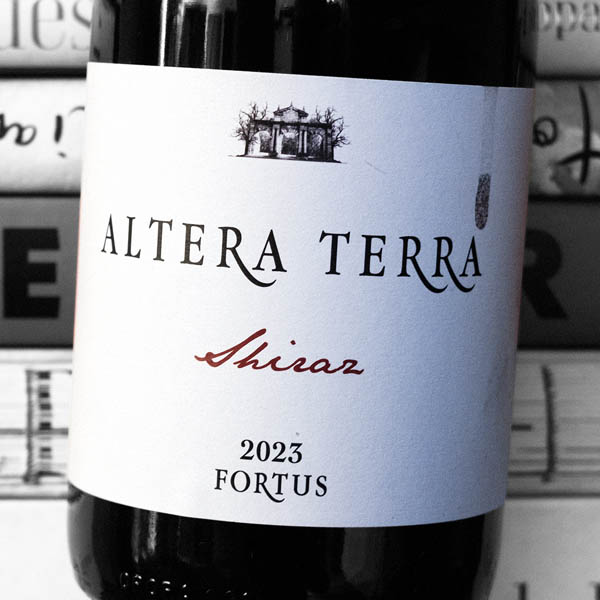
Altera Terra Fortus Shiraz 2023 (South Eastern Australia, SA/NSW)
Luxurious smelling shiraz of the cane berry and spicy kind: this is so intense. Fruit mince pie filling crystallised peel, which builds around Sichuan and mixed black pepperiness. Dark chocolate of the 88% kind. But it’s the intense mixed cane—forest—berries which linger in the glass when it’s empty. And gentle pepper. This is the signal that this is composed of fruit of impeccable quality. There’s deciduous understory among it also. The palate is super-intensely powered also, and the fruit is spiralled about immaculately structured tannins. There’s punnets of those cane berries again; compressed, pippy, juicy and dense. The oak has is steeped in fruit, and you know it will seep back too. A mouth-sucking core and all lingers long. Transitory tweaks of soy seaweed among all bitter crystallised peel and shiny rye crustiness. Fab shiraz. 95(96)/100 (e) - 10/10 (h) - 😋😋😋 - $45 cellar direct.
Rewind fifty years and blends of shiraz from South Australia and New South Wales were much appreciated, and sought after. Back then though the grapes would have been a blend of McLaren Vale Shiraz and Hunter ‘Hermitage’ which was a common nom-de-plume for Syrah in the day. It would have been nothing as specific—or original—a mix as Blewitt Springs, a sub-region of McLaren Vale, combined with Murrambateman, a sub-region of the Canberra District.
The fabulous, pure pepperiness in this comes courtesy of the Murrambateman vineyard which makes up fifty percent of the blend. The 2023 Altera Terra Murrambateman Syrah is loaded with it too (this wine is reviewed below and also alongside my story Descents into Scent where I review Harold McGee’s peerless sensory masterwork, Nose Dive), although the Syrah does not have the Sichuan spice characters exhibited in this wine (to me, at least).
The other fifty percent is from Blewitt Springs, which provide quite a bit of spiciness in cooler years. And the pepperiness in this is fascinating: it’s like a combination the rotundone of black and white peppercorns and the sanshool of the Sichaun pepper kind.
Unlike most small multi-regional winemakers Doug Neal vinifies each wine in the region of origin and then returns the wines to Victoria post-fermentation in barrel before the wines are blended (where appropriate). The majority of other small wine producers would, I’d suggest, transport the grapes after harvest to a winery for centralised vinification.
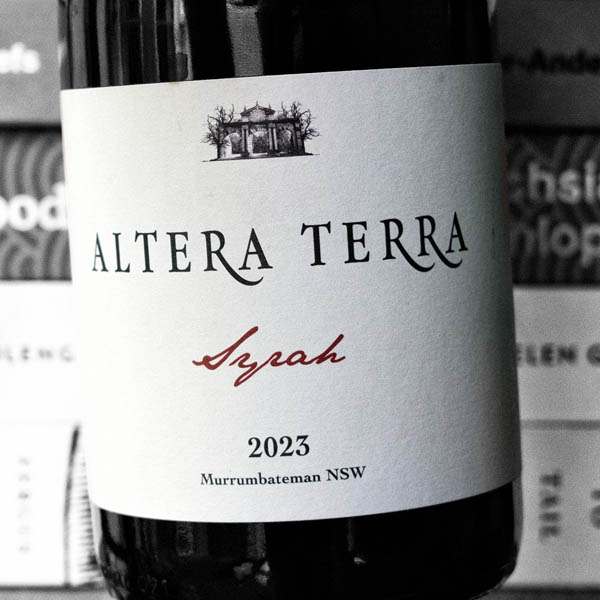
Altera Terra Murrumbateman Syrah 2023 (Canberra District, NSW)
Fine spice in here—purest black pepper-like spiciness—among sweet smelling forest berry sweetness. And cherry morello pie and crust—short crustiness. Blood plum sage. Sensational exuberant fruit on the palate also; there's blood plum blood orange (candied), cane berry pips and sweet cured meaty sapidity. Has an easiness and wetness to the tannin, which carries loads of exuberant sweet/sapid fruit flavour. At least for the first two thirds, because it does dip a bit in the last. But there’s lots of fun forest pippiness to suck on with a fudgey mouth-aroma waft or and transitory Aussie sous bois which is entirely positive and adds character. Squeezy forest pips warming on red rock. 92/100 (e) - 9/10 (h) - 😋😋😋 - $45 cellar direct.
As you can see from my review I reckon this wine is fabulous, it’s just the slightly abrupt finish that precludes me scoring it higher on my - (e) - empirical scale. But I’d polish off more than a glass or two of this daily basis were it to hand.
The rotundone here is pure and intense. That’s if it’s a compound you were born to able to enjoy, as not everyone perceives it.
If you don’t feel like digging deep into your pocked for an ebook edition of Nose Dive—but I do recommend it—there’s a piece on the matter of its discovery and significance—in peppercorns and Shiraz-Syrah—by McGee in his Curious Cook column for the New York Times here.
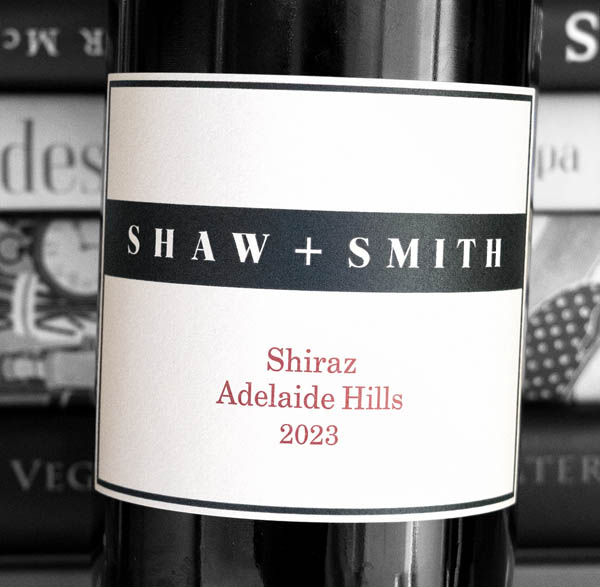
Shaw and Smith Shiraz 2023 (Adelaide Hills, SA)
Wafts of wet pepper (for those not rotundone challenged) among punnets of cane berries of the red into black kind. Dense, dehydrated raspberry and loganberry pips, getting juicier as the wine gathers air. Aromatic in a galangal and kumquat kind of way also. There’s woodsy, understory moistness. Bitter peel zings among the fragrant spice. Attacks with oozing, edgy cane berry and peel fruit also and with the finest coal scuttle dusty tannins—a real carbon sparkle—which evolve across the palate, building and shaping. There’s dark, nori-like* mouth-aroma wafts too and then more crystallised peel, among dehydrated Asian plums. Sweet and sharp finishing. Fascinating shiraz this and why we should continue to adore and explore it (shiraz I mean). 94/100 (e) - 9/10 (h) - 😋😋(😋) - $59 cellar direct.
*There’s a touch of (whole) bunchiness in this—or I think there could be—hence my nori observation. The is not because I ‘see’ it as bunch, but that nori character is sometimes derived from it, when you’ve got ripe rachis material in there with the berries. It’s a positive, complexing component, however—not a feature.
(I have been in subsequent contact with senior winemaker Adam Wadenwitz and he has confirmed that there is a whole bunch component—around 30% apparently. Which is lower than would ordinarily be employed because of the nature of the—cooler—vintage.
Okay, so why only 94/100 (e) accompanying my raves? Well it pulls up a bit in the last third, is what my palate told me. But maybe I’m being a little abstemious ‘empiric’ points-wise. However, as I’ve observed elsewhere of other wines, if I encountered this at a wine show and other judges pointed it higher, I’d be inclined to move upwards. Because it also looked great on day two. Bear in mind a 94/100 from me is like most other Aussie wine ‘influencers’ 96-97/100 (I can’t bring myself to describe any—or many—of these individuals as critics in any rigorous sense).
The Halliday Wine Companion, unfortunately—and particularly—has devalued any notion of meaningfulness to the hundred point scoring scale in Australia; upgrading as it does, many a producers wines to gold medal level (that’s 95/100 and above), vintage in and vintage out. Irrespective of how the conditions across the growing season may have influenced the grapes which inspire the flavours of the liquid in the glass. So, in the process of its score inflation, it has managed to devalue the influence of Mother Nature in the marvel that is a glass of wine.
(Reference this quote from theoretical pyhsicist and Nobel laureate, Richard Feynman—not about the Halliday score devaluation, but the universe that is in a glass of wine.)
I must emphasise that this credibility devaluation of the 100 point scale I discuss above is pertinent to its use in wine reviewing environs only (especially the Halliday Companion). It continues to be applied with diligence and merit by judges at Australian wine shows.
So you might add a couple of extra points yourself if you’re inclined, or want some high score reassurance. Cuz that’s what the Halliday Companion reviewing crew would do anyhoo. (Although you’ll have to trust me on the Coates’ wines reviewed on this website as they have not featured in the past two Halliday guides).
As you will observe the Shaw and Smith ‘23 Shiraz gets a 9/10 hedonic from me anyway, which means I’d knock it back with gusto any day of the week (not that I can afford to, sadly). Hence the trio of yummy emoji also. There’s lots of interesting things going on in this fine Australian red wine.
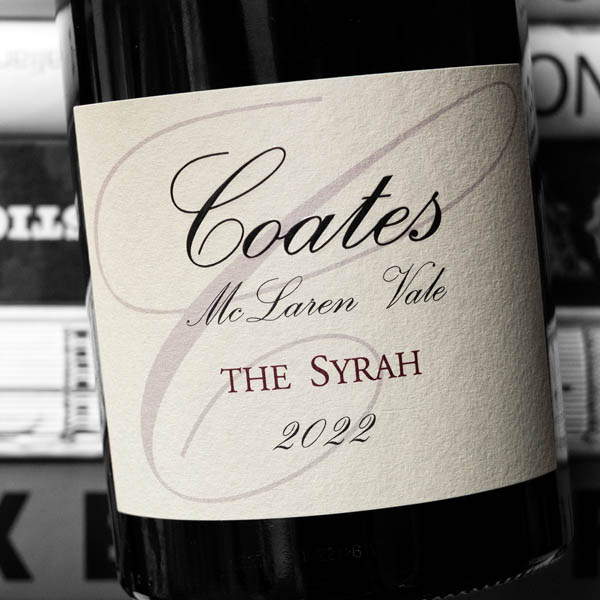
Coates The Syrah 2022 (McLaren Vale, SA)
Fabulous woodsy, bark spiciness in here. Soy and wood strawberries. Fig skins. Some San Francesco Parma also*. Soused plum, so smells deep and saturated. Melty yet dense tannin among autumn plum compote on the palate and—later—deciduous autumn leaf soy mouth-aromas. As well as oyster shell—so a satisfying umami property about it, but still lots of fruit sparkle and juiciness. There’s serious density to the fruit in here, which you really understand on day two, and the tannins shape it supremely. Darn fine complimentary oak as well—quite fancy methinks—and there are the beginnings of decay*, which is sure to resonate further with a few more years in bottle. 94(95)/100 (e) - 9/10 (h) - 😋😋😋 - $32 cellar direct.
One evening, a couple of months ago, while on deli duties at Adelaide’s Finest Frewvilleland, a regular customer (who I now know to be Des) asked which were my preferred SA shirazes. Not that we sell wine at Frewvilleland, except at Mr. Nicks Café, where I once had a hand in selecting the wine list.
Des, you see, had enquired about my wine background a little while before, having apparently heard me rattle-on about matters vinous with other customers. When I informed him that I’d written a wine column for The Australian Financial Review for nigh-on a quarter of a century he enquired: ‘Are you Tim White?’
When I affirmed this he got a bit excited. Telling me he’d read my stuff lots over the years and much enjoyed it. He even grabbed one of his friends from somewhere else in the supermarket to introduce me to them.
This exchange gave me quite a lift, as it was around the time I had been grappling with my late father’s—Desmond William White's—eulogy. Searching for appropriate words through research—revisiting—distant events, both the positive and painful, had caused me some restless nights. Even after it was finalised and delivered.
But the complicated process of doing had prompt me into pondering that I’d better spend a little more time writing words about another something which has been a more than significant part of my life. Especially in the matter of longer form works, as there’s much that I have filed away that will remain unstated unless it’s formally published.
So you will now find on my website recently published pieces about one of the great Chardonnay vineyards of the world, which is Tapanappa’s Tiers; a view ot two about Viognier in Australia; and a related piece pertinent to the relaunch of Mitchelton’s Airplane. Also a story about Longview Vineyard in Macclesfield, but which importantly, to me at least, shoots laterally to the matter of the significance of Nebbiolo in Australia.
I’ve also revisited a piece I deliberated long on in 2022, titled Descents into Scent, about the seminal sensory work, which is Harold McGee’s, Nose Dive. This was originally published in the 2023 January/February edition of Wine Business Magazine.
As well as a thorough reworking of a piece originally commissioned by Xavier Bizot of Terre à Terre and Daosa, titled The Case for Australian Claret. In addition I’ll continue to expand on individual wine reviews on the landing page in these feuilletons as I’ve—perhaps somewhat grandly—taken to describing them.
But back to Des’s shiraz query. The first wine he posited as a probable desirable example was Shaw and Smith, which surprised me a bit but says much of the wine's burgeoning reputation. So it’s appropriate to review the ’23 here, although I’d not tasted it at the time of Des’s questions. He then also asked for a view on the variety in McLaren Vale.
This was easy to respond to as a couple weeks prior I’d begun to accumulate further perspective about Duane Coates’ latest releases. The ’22 Syrah, you see, I had first tasted jover the road from Frewvilleland at Hurley Cellars (at The Arkabar). Duane was pouring his wines to interested customers at this most positively-provisioned Adelaide bottlo, and I’d arranged to gather a box of tasting samples from him there.
So I had a gander at them also and remarked how good the ’22 The Syrah was looking: fabulous tannin in shiraz being a hallmark of the ’22 vintage in McLaren Vale, Clare, and the Adelaide Hills.
Duane then told me that I was the first wine writer to ever review his shiraz. I was going to say ‘reminded me’, but I unaware of this until he mentioned it.
I’d reviewed his 2003 Shiraz—and also wines from Cascabel, Coriole, Samuel’s Gorge, and Shingleback— on the same page as my Australian Financial Review column of the 6th January 2006. The subject matter of my column were the first releases from S.C. Pannell: a 2004 Shiraz Grenache and 2004 Shiraz.
Duane also told me that I’d referenced ‘prosciutto’ as one of the flavour descriptors in my review. We had a chuckle about this as I’d mentioned previously that references to the smells and tastes of cured meats and cheeses had been been appearing a bit more in my reviews since I’d began my latest sensory voyage on the deli at Frewvilleland over the road.
So I’m being quite specific about the prosciutto in this review. Which was tasted in a little half-blind line-up. Even if it weren’t there I’d have stuck in it anyway when I learned what it was. 😀
Haddow and Dineen Crows Descended Shiraz 2023 (Tamar Valley, Tas)
Sour cherry, white pepper, and brie skin, among juicy autumn gold plum flesh slipping from its skin. Burgeoning black cherry walnut as it sits, getting more green peppercorn and frankincense with aeration. Cane berries of the sharper loganberry kind. There’s lots going on here, as there is when it lands on the tongue and warms. There’s chewy, bitey ruby grapefruit-like peel, and it’s sweet-sharp in a sumac way ahead of brisk raspberry pippy fruit, bitter chocolate, and woodsy leaf. Transitory twists of pepper abound among the pulses of juiciness. The tannins are meticulously extracted and—along the way—there are gentle mouth-aroma wafts of rye crustiness too. In short: shape, fragrance, and complexity—of both the ortho- and retronasal kind. 95/100 (e) - 9/10 (h) - 😋😋😋 - $60 cellar direct.
At the reveal of the little Shiraz-Syrah line-up I’d dropped this into it was not altogether surprising to learn the origin of this beguilingly spicy Shiraz. Like the almost equally fabulous ‘22 release of Crows Descended, my palate memory recalled a of the 2015 Marion’s Vineyard Syrah.
The clone in both at Marion’s north of Launceston on the left-bank bank of the glorious Tamar, and the one planted in this old Relbia vineyard, to the immdiate south of Lonnie, are almost certainly identical. Jeremy Dineen tells me that is R6W planted at Relbia which is a venerable and widely disseminated clone sourced from Tahbilk (nee. Chateau Tahbilk) in Nagambie (Victoria), an estate which is home to some of the oldest Shiraz to be found anywhere in the world.
It’s interesting that Dineen and his partner in wine, acclaimed cheesemaker Nick Haddow, have elected to label this Shiraz as many others growing such expressively fragrant, peppery—rotundone-loaded—shiraz of this kind usually opt for the more typically French monicker, Syrah.

Brokenwood Shiraz 2023 (Hunter Valley, NSW)
Crusty—spelt crusty—plum skin spicy pie. Mulberry sharp with gentle pink pepper among a sniff of lemon vanilla oak, in an entirely positive and most attractive way. In time—over the course of an hour or two—it gives some moist red dirt earthiness, a transitory waft of fresh porcini. Deep dark and sweet tarry blooming. A sniff of gunpowder. Fabulous palate: it’s both expansive and crisp; dense and persistent. It’s sweet-sharp cane-berry pippy—boysenberry and raspberry—getting more ripe figgy as it evokes (in the glass). Gentle mouth-aroma wafts of cracked pepper too among the persistent, vibrant plum compote fruit. This is already so approachable, but nonetheless most serious and will certainly get more complex with a few more years in bottle. 94(95)/100 (e) - 9/10 (h) - 😋😋😋 - $55 cellar direct.
This blend of Brokenwood owned and managed shiraz parcels contains some seriously high quality stuff, with the fruit coming from both younger vines and deselected barrels (all puncheons—500l—) from the Graveyard, Tallawanta, Verona, and Mistress Block vineyards. These have also been released as single vineyard selections in their own right and range from $100-500 as standalone bottlings (follow links for more detail). So this represents something of a Brokenwood Hunter shiraz bargain.
This wine was assessed in a smallish 'half-blind' line-up of ’23 vintage shirazes including the Graveyard release also reviewed here. As well as a few A.P. Birks Wendouree Cellars. When, as is my custom—Following a tastimg whenever it’s practicable— around to friends and wine-loving interested. Both Sharon and George loved this.

SHIraz-SYRAH of PAST Note
wines by KT 5452 Shiraz 2022 (Clare Valley, SA)
Intense fruitcakey depths here, cut by carbon paper and star anise. (Here’s a link to carbon paper for those who’ve never experienced the smell of the stuff on your fingers). Gets more bitter chocolate pudding as it sits and opens. Suggests both squidgy richness and pippy cut (how it may taste, I mean). Blue vein crust too (some good older wood is what I’m sniffing and thinking). Dense sweet-sapid nougat Parma too. Has pippy, cane berry juice as well as richer fruitcake sweetness, and balanced dabs of Turkish coffee ground tannin and bitter chocolate. Cold steamed chocolate pudding mixed with soused fruitcake. Fruit galore, a deep core, a fab middle, plus a significant finish with all neccesary structural componentry around it, make this one hell of a shiraz. 95(96)/100 (e) - 9/10 (h) - 😋😋😋 - $45 cellar direct. Drink now or cellar up to a decade; or dip into its delights anywhere in between.
When I ventured my coffee grounds tannins observation to Kerri (Thompson) she immediately responded: ‘That’s Howarth (vineyard): Armagh’. Apparently there’s a decent dollop of Howarth in it, along with fruit from three other dry-grown shiraz blocks dating back to 1970. I’d no idea of this at the time of tasting, but I have subsequently tasted Kerri’s eponymously labelled Howarth Vineyard Shiraz Cabernet Sauvignon from the same vintage and it is one seriously structured and powerfully fruited Aussie claret.
My coffee grounds descriptor, usually shortened from ‘Wendouree coffee grounds’ or ‘Turkish coffee grounds’, is the descriptor in my vernacular I deploy when I come across a tannin meets coffee crema character. So, it’s a textural taste and a most positive one.
While these days I’m not a regular coffee drinker I do participate in it if I drop by A.P. Birks Wendouree Cellars around ‘smoko’ time, when Tony Brady is proffering his intense and meticulous take on perfect coffee, and Lita Brady her dexterous touch on the the most delicious slice of cake. I deploy this coffee grounds descriptor—or so I thought—to describe an oak-tannin interplay on the palate. Now I’m not so sure.
Because I’ve made the observation more than a few times for reds of different persuasions from Clare in the ’22 vintage, although interestingly—to me at least—only in those from the northern part of the region. These wines being: O’Leary Walker Shiraz (Polish Hill River and Armagh), Knappstein The Mayor’s Vineyard Shiraz (Spring Farm), Wendouree Cabernet Sauvignon (Spring Farm), Wendouree Shiraz Malbec, and Adelina Shiraz Malbec YV (Spring Farm).
And here’s an interesting thing I discovered revisiting

Brokenwood Graveyard Vineyard Shiraz 2023 (Hunter Valley, NSW)
Punnets of sparkly, juicy intense forest pips. Darkness too: mulberries, baking spice and a veal bone stockiness. This possess amazing fruit power, but—most importantly—there’s also space among the concentration. Subtle white pepper. Pork fat smoke smelling—aromatic oak?—sitting intimately among the cane berry deeps. Just gets better and better as it opens. Awesome intensity on the palate too, and with the structure to contain and shape the dense cane berry-plum coulis in wet terra cotta things. Density and restraint; fruit width as well as length. The tannins are beautifully extracted. What an elegant yet intensely shaped palate this possesses. Finest smoked hock and parma among the intense black fruit and mouth-aroma spice to conclude although there’s still plenty more that will be disinterred with time. An exemplary Graveyard. 97(98)/100 (e) - 9/10 (h) - 😋😋(😋) - $500 cellar direct. Needs at least another five years to acquire truly extravagant yumminess.
The first Brokenwood wine I ever tasted—at a barbecue in the garden Ruthven Street, Bondi Junction—was a 1985 Hermitage, Cabernet Sauvignon. I’d no idea what it was about or or its exact origin, but its soft, generous qualities immediately attracted me to it and it became fixed in palate memory. Only much later would I learn it was from the Graveyard vineyard, a place of nigh-on hallowed Hunter ground.
